
What Is An Interdental Brush And How To Use It?
Many people brush their teeth every day, but they are concerned about food getting stuck between their teeth. One simple tool that can greatly improve oral hygiene is the interdental brush, a small cleaner designed to reach where a normal toothbrush cannot. Learning the use of interdental brush can make a real difference to your daily oral care routine.
Interdental brushes are very beneficial for people with braces, bridges, implants, or fixed dentures, but they are also useful for anyone who wants more thorough cleaning. When used the right way, they remove plaque and food leftovers and reduce the risk of gum problems, inflammation, and bad breath. Many patients first hear about these brushes while planning their turkey dental treatment, then continue using them at home for long-term protection.
In this article, you will find out what an interdental brush is and how it works. You will also learn how to select the appropriate size and use it gently without damaging your gums.
Satisfied Patient Reviews
EXCELLENTTrustindex verifies that the original source of the review is Google. Service impeccable. Je suis venue pour des implants. La prise en charge a été rapide et la douleur pendant et après l’opération a été à peine ressentie. Clinique très professionnelle et chirurgien expert. Personnel très accueillant, en particulier la Directrice. Recommande à tous ceux qui sont à la recherche de professionnels pour régler des problèmes dentaires Suis venue finaliser la pose des implants et des couronnes. Résultat impécable!Posted on GoogleTrustindex verifies that the original source of the review is Google. I visited from England and had a positive experience. I went for a Hollywood Smile look and couldn’t be happier with them. The clinic was very aesthetic & clean, the staff were very attentive and supportive & I high recommend them.Posted on GoogleTrustindex verifies that the original source of the review is Google. İmplantlarımı ve zirkyonyumlarımı yaptırdım 2 sene önce iyiki yaptırmışım çok memnunum doktorum emrah hoca işinde çok iyi birisi tüm çalışanlara çok teşekkür ediyorum güler yüzlü anlayışları için gülşah hanıma ayriyetten teşekkür ederim 🌹Posted on GoogleTrustindex verifies that the original source of the review is Google. Çok güzel ve güveninirPosted on GoogleTrustindex verifies that the original source of the review is Google. Friendly and approachable staff, above all I haven’t experienced any pain what so ever, it does truly shows core professionalism. Coming from Wolverhampton, UK and made implant surgery with sinuslifting Gedi JafarPosted on GoogleTrustindex verifies that the original source of the review is Google. Ik Marco, hebt mijn gebit laten doen bij Avangart.. En ben door lieve mensen goed ontvangen en behandeld.. Kliniek zeer hygienisch en goede apparatuur.. Deze kliniek zo ik zeker aanraden om je laten behandelen..😁Posted on GoogleTrustindex verifies that the original source of the review is Google. I traveled from the U.S. and had Avantgart Clinic positively transform my smile in a manner that I wouldn’t have conceived as being possible. Dr. Egemen, a true master in his field, was patient, considerate, and communicative throughout the process and his assistant, Sevim, was a real joy to work with. Together, the two of them combined to make the overall experience much greater than I could have ever hoped for, and the end result is a smile that is on par with the most glamorous of Hollywood stars. I am extremely satisfied and would highly recommend Avangart Clinic to anyone looking to enhance their smile at a great price and of the highest quality.Posted on GoogleTrustindex verifies that the original source of the review is Google. Herkes mükemmel ıscılık mükemmel teşekkür edıyorumPosted on GoogleTrustindex verifies that the original source of the review is Google. Emrah bey‘in diş konusundaki tecrübesi, güler yüzü ve uzmanlığı nedeniyle diş tedavilerim için her seferinde Avusturya‘dan İstanbul’a gelmekteyim. Diş kliniği de son teknolojik donanıma sahip güven verici muayenehaneler içermekte.Posted on GoogleTrustindex verifies that the original source of the review is Google. Güler yüzlü ekip, temiz ve modern bir klinik. Tedavi sürecim baştan sona çok profesyoneldi. Gönül rahatlığıyla tavsiye ederim.Verified by TrustindexTrustindex verified badge is the Universal Symbol of Trust. Only the greatest companies can get the verified badge who has a review score above 4.5, based on customer reviews over the past 12 months. Read more
What Is an Interdental Brush Used For?
Teeth are usually very close to each other, but small gaps can form due to tooth shape, fillings, gum problems, or natural spacing. Even if you brush twice a day, these tight spaces can trap food and bacteria. This trapped debris eventually develops into plaque and tartar, which can cause gum disease and bad breath.
An interdental brush is designed to clean these hidden spots so your mouth stays fresher and healthier. Here are some of the most common ways it is used
- Removes food and plaque between teeth where a normal toothbrush cannot reach
- Cleans gently around implants, bridges, and fixed dentures
- Works under brackets and wires during orthodontic treatment
- Helps protect areas with gum recession
People with braces, crowns, or dental implants often benefit a lot from this extra level of cleaning, but it is also helpful for anyone who wants a more complete routine. Many dentists notice that those who use interdental brushes regularly have less bleeding, less gingivitis, and fewer complaints about bad breath.
It is critical to select the right size and move the brush slowly and gently, without forcing it. Packages often show different sizes using interface toothbrush numbers or color-coded systems, which your dentist can explain so you can choose a brush that fits safely between your teeth.
How to Use an Interdental Brush Correctly for Best Results
Once you have learnt the proper techniques, using an interdental brush is simple. For best results, brush your teeth with a normal toothbrush first so most plaque and food are already cleared away. The interdental brush can then clean the tight gaps that a regular brush cannot reach.
You can follow these steps for correct use.
- Hold the brush near the tip and place it gently into the space between two teeth at a slight angle.
- Move it slowly back and forth around ten times without pressing hard, then take it out.
- Repeat for each gap you can reach, then rinse your mouth and clean the brush under running water.
Do not put toothpaste on the interdental brush because it is not needed and can be too abrasive for the gums. Some dentists advise rinsing with an antiseptic mouthwash before cleaning the spaces, which can give extra protection against bacteria.
If you feel strong pain or notice bleeding that does not improve after a few days, stop using the brush and ask your dentist for guidance.
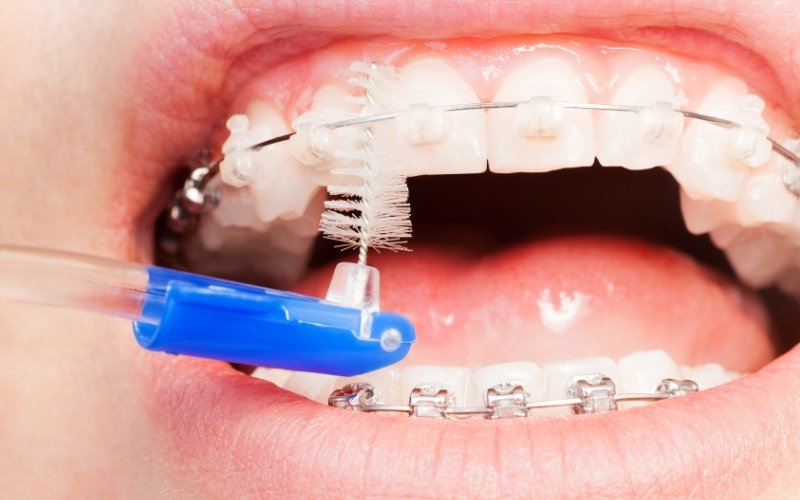
Why Choosing an Interdental Brush Can Improve Your Daily Cleaning Routine
Adding an interdental brush to your daily cleaning routine can be a quick and easy way to make it better. Its slim, flexible head reaches the tight spaces where your normal toothbrush struggles, so less plaque and food remain between your teeth. This extra step helps protect not only your teeth but also your gums and overall mouth health.
Some of the main advantages of using an interdental brush are listed below:
- Helps reduce bacterial growth and plaque between teeth, lowering the risk of tartar buildup
- Supports more complete oral care than brushing alone
- It can be easier and more effective than floss in many areas
- Reaches tricky spots and lowers the risk of gum disease and tooth loss
- Helps keep gaps from getting larger and supports a nicer smile
Later in this guide, we will also look at how to choose an interdental brush so you can enjoy these benefits safely.
Who Can Benefit the Most From Using Interdental Brushes
Interdental brushes can be helpful for almost everyone who wants cleaner and fresher teeth. They are especially useful when there are small spaces or dental work that make normal brushing less effective. By reaching tight areas, they help keep gums healthier and reduce the risk of long-term problems.
People who may benefit the most include:
- Those with visible gaps between their teeth
- People with receding gums or sensitive roots
- Anyone who has dental implants
- People wearing bridges or other fixed prostheses
- Patients in orthodontic treatment with brackets and wires
- Those with a history of gum disease
- People who often struggle with bad breath
If you are in one of these groups, an interdental brush can quickly become part of your daily routine.
Understanding Interdental Brush Sizes and Number Codes
Interdental brushes are made in different sizes so they can fit many types of spaces between teeth. Each size has a number that shows the width of the brush tip in millimeters, and many brands also use a color system to make the choice easier.
How many mm should the interdental brush be for your mouth?
A slim brush between 0.4 mm and 0.5 mm is best for very tight gaps, while a brush between 0.6 mm and 0.7 mm is better for spaces that are a little wider. For medium gaps, brushes that are 0.8 mm to 1.0 mm thick are usually the right size. For larger gaps, brushes that are 1.1 mm to 2.0 mm thick may be needed. It is best to let your dentist or hygienist check these sizes with you and suggest the right number and colour so you do not leave plaque behind or hurt your gums.
How to Pick the Right Interdental Brush for Your Teeth Gaps
Choosing the right interdental brush starts with a quick chat with your dentist, because they can see the real size of your gaps and advise you safely. Once you know the size or number that fits between your teeth, it becomes much easier to build a daily routine you can keep up. A brush that glides in with light resistance will clean well and is less likely to hurt your gums.
After size, a few more helpful points to consider are:
- Bristle material, since synthetic bristles tend to be firmer, while natural bristles are often softer for sensitive areas
- Bristle length, because longer bristles reach into narrow gaps, while shorter ones work well for general cleaning
- Brush head and handle size, which should match the area you want to clean and the way you hold the brush
- Handle design, especially if you have trouble with grip, joint pain, or any neurological condition that affects hand control
If you are unsure at any step, bring your existing brushes or packaging to your next appointment and ask your dentist to check them. They can show you how far the brush should go and how to move it without scraping or bending too much. With the right advice, you can select a brush that is comfortable to use, cleans effectively, and promotes long-term dental and gum health.
Before and After: Transformative Results with Avangart Clinic
We carry out all our dental treatments with care and strive to give your smile an elegant appearance.


FAQs About Interdental Brushes
Are interdental brushes disposable? They are actually reusable for a short period, not single-use items. You can keep using the same brush until the bristles bend, wear out, or look dirty, as long as you rinse it well after each use.
Dentists generally suggest using an interdental brush without toothpaste. Plain water is enough, and it helps the bristles glide gently without irritating your gums.
Interdental brushes wear out faster than regular toothbrushes, so they need more frequent changing. In most situations, you should change your interdental brush every week. You can use some brushes for up to two weeks, but only if the wire stays straight and the bristles still look clean and firm, not bent or worn out.
Interdental brushes do not clean the tongue directly, but they still support fresher breath by removing food and bacteria between the teeth. However, a lot of bacteria remain on the tongue even after you brush your teeth.
For this reason, it is still important to clean your tongue every day with a toothbrush or tongue scraper. Regular tongue brushing reduces sulfur compounds and helps prevent bad breath.
An interdental brush cleans the tight spaces between your teeth that a normal toothbrush often misses. It removes trapped food, soft plaque, and bacteria from these gaps and from around the gumline, helping to protect your teeth and gums from future problems.
Most people can safely use an interdental brush, and many find it easy to incorporate into their daily routine. However, not every tooth shape or gum condition is appropriate for this method of cleaning.
Before you begin, let your dentist examine your mouth and advise you on the appropriate size and technique. If the brush is too thick or used in a vulnerable area, it can irritate or damage the gums around the gap, so getting professional advice on the correct size is essential.