
Zygomatic Implants vs. Bone Grafting: Solutions for Severe Upper Jawbone Loss
Dr. Emrah YEŞİLYURT
Dr. Emrah Yeşilyurt is the Founder of Avangart Clinic. He combines advanced dental expertise with a genuine commitment to helping patients feel comfortable and informed about their oral health journey.
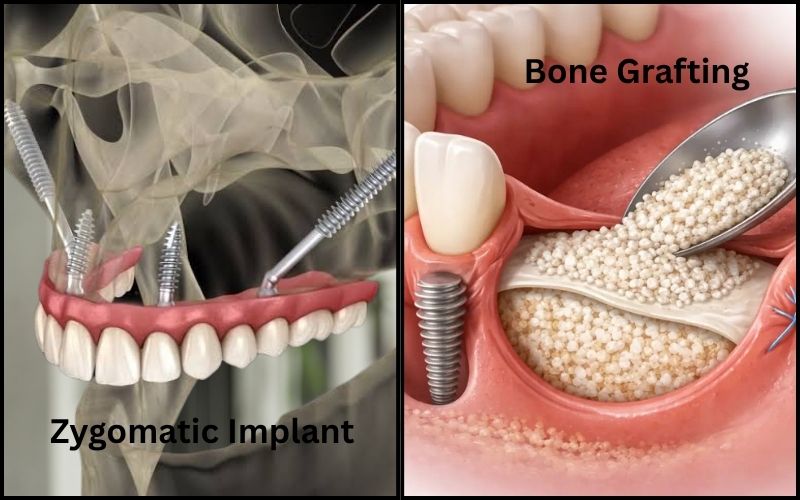
Severe upper jawbone loss leaves dentists with two main options: rebuild the bone through extensive grafting and sinus lifts, or bypass the jaw completely with zygomatic implants. Grafting needs many months to heal. Zygomatic implants, however, anchor directly into the dense cheekbone, which can often allow for immediate placement.
Hearing you lack the bone required for traditional implants can be incredibly stressful. It’s a scary thought to have to live with loose dentures forever or watch your face slowly change its shape. Yet, lacking bone density in your upper jaw does not mean a permanent smile is impossible.
Fortunately, severe bone loss does not mean you are out of options. We approach this problem in one of two ways: biologically rebuilding the foundation with a graft, or completely bypassing the weakened bone using zygomatic implants.
Satisfied Patient Reviews
EXCELLENTTrustindex verifies that the original source of the review is Google. Service impeccable. Je suis venue pour des implants. La prise en charge a été rapide et la douleur pendant et après l’opération a été à peine ressentie. Clinique très professionnelle et chirurgien expert. Personnel très accueillant, en particulier la Directrice. Recommande à tous ceux qui sont à la recherche de professionnels pour régler des problèmes dentaires Suis venue finaliser la pose des implants et des couronnes. Résultat impécable!Posted on GoogleTrustindex verifies that the original source of the review is Google. I visited from England and had a positive experience. I went for a Hollywood Smile look and couldn’t be happier with them. The clinic was very aesthetic & clean, the staff were very attentive and supportive & I high recommend them.Posted on GoogleTrustindex verifies that the original source of the review is Google. İmplantlarımı ve zirkyonyumlarımı yaptırdım 2 sene önce iyiki yaptırmışım çok memnunum doktorum emrah hoca işinde çok iyi birisi tüm çalışanlara çok teşekkür ediyorum güler yüzlü anlayışları için gülşah hanıma ayriyetten teşekkür ederim 🌹Posted on GoogleTrustindex verifies that the original source of the review is Google. Çok güzel ve güveninirPosted on GoogleTrustindex verifies that the original source of the review is Google. Friendly and approachable staff, above all I haven’t experienced any pain what so ever, it does truly shows core professionalism. Coming from Wolverhampton, UK and made implant surgery with sinuslifting Gedi JafarPosted on GoogleTrustindex verifies that the original source of the review is Google. Ik Marco, hebt mijn gebit laten doen bij Avangart.. En ben door lieve mensen goed ontvangen en behandeld.. Kliniek zeer hygienisch en goede apparatuur.. Deze kliniek zo ik zeker aanraden om je laten behandelen..😁Posted on GoogleTrustindex verifies that the original source of the review is Google. I traveled from the U.S. and had Avantgart Clinic positively transform my smile in a manner that I wouldn’t have conceived as being possible. Dr. Egemen, a true master in his field, was patient, considerate, and communicative throughout the process and his assistant, Sevim, was a real joy to work with. Together, the two of them combined to make the overall experience much greater than I could have ever hoped for, and the end result is a smile that is on par with the most glamorous of Hollywood stars. I am extremely satisfied and would highly recommend Avangart Clinic to anyone looking to enhance their smile at a great price and of the highest quality.Posted on GoogleTrustindex verifies that the original source of the review is Google. Herkes mükemmel ıscılık mükemmel teşekkür edıyorumPosted on GoogleTrustindex verifies that the original source of the review is Google. Emrah bey‘in diş konusundaki tecrübesi, güler yüzü ve uzmanlığı nedeniyle diş tedavilerim için her seferinde Avusturya‘dan İstanbul’a gelmekteyim. Diş kliniği de son teknolojik donanıma sahip güven verici muayenehaneler içermekte.Posted on GoogleTrustindex verifies that the original source of the review is Google. Güler yüzlü ekip, temiz ve modern bir klinik. Tedavi sürecim baştan sona çok profesyoneldi. Gönül rahatlığıyla tavsiye ederim.Verified by TrustindexTrustindex verified badge is the Universal Symbol of Trust. Only the greatest companies can get the verified badge who has a review score above 4.5, based on customer reviews over the past 12 months. Read more
Understanding maxillary bone loss (why the upper jaw is different)
The upper jaw (the maxilla) presents unique anatomical challenges. The bone here is naturally softer and more porous compared to the thick, sturdy bone in your lower jaw. This softer texture makes securing an implant inherently harder.
You also have sinus cavities resting right above your upper back teeth. Once you lose teeth, a double deterioration process starts. As the jawbone recedes where the teeth used to be, the sinus cavities expand downwards into the empty space.
This leaves behind a paper-thin layer of bone that simply cannot hold a standard dental implant. Many patients ask us: if you have gum disease, can you get implants safely? Active gum disease does more than cause soft tissue recession. It dramatically speeds up jawbone deterioration. Because of this, we recommend clearing the active infection and fixing the missing bone volume before you even think about getting an implant.
Option 1: bone grafting and sinus lifts (rebuilding the foundation)
To restore that missing volume, the traditional method involves a sinus lift. The oral surgeon gently lifts the delicate sinus membrane upwards, then packs bone graft material into the new space to build proper bone depth.
Over the coming months, your body absorbs the material and replaces it with your own natural bone. It is a biological process that leans heavily on your body’s inherent healing capacity.
While effective, extensive bone grafting may be needed depending on how much bone you’ve lost. The surgeon might use bone from you, a donor, or a highly purified animal-derived source. Ultimately, the goal remains the same: creating a thick, solid base for standard dental implants.
The pros and cons of extensive bone grafting
Deciding on a sinus lift means weighing the long-term biological benefits against a very long recovery timeline.
Pros of bone grafting:
- Proven success: Once healed, this allows for traditional, shorter implants. Maxillary sinus floor augmentation (sinus lifting) is highly predictable despite the lengthy timeline. A comprehensive 15-year retrospective study demonstrated long-term success rates of 98.3% for the bone grafts and 97.2% for the standard implants placed within them.
- Highly adaptable: We can carefully tailor the graft volume and type to repair specific anatomical defects.
- Restores natural shape: By biologically regenerating your bone, it restores the structural contours of the jaw, helping prevent facial collapse.
Cons of bone grafting:
- It takes a long time: The grafted bone needs several months to solidify. You cannot get implants immediately.
- Healing can be unpredictable: With extreme bone loss, there is a higher clinical risk that the massive graft could fail to integrate properly.
- Dealing with dentures: You will likely wear a temporary, removable denture throughout the lengthy healing period.
Option 2: zygomatic implants (bypassing the jawbone)
When almost no bone remains, rebuilding the entire upper jaw is highly unpredictable. Zygomatic implants provide an advanced alternative. Rather than relying on a compromised upper jaw, these extra-long titanium posts bypass the depleted maxilla completely.
The surgeon angles them to reach straight up into your cheekbone (the zygoma). Your cheekbone is made of incredibly dense cortical bone that rarely deteriorates. It offers a rock-solid anchor for a full-arch dental prosthesis.
The pros and cons of zygomatic implants
Anchoring into the cheekbone changes the entire timeline for severe cases. Still, it remains a major surgical intervention requiring careful thought.
Pros of zygomatic implants:
- No bone grafting: You bypass the need for massive bone grafts and sinus lift procedures entirely.
- Rock-solid stability: The cheekbone’s density means the implants achieve exceptional primary stability immediately. A comprehensive consensus report by the ITI demonstrated a long-term mean zygomatic implant survival rate of 96.2% over follow-up periods of up to 11 years.
- Immediate teeth: Given that structural stability, you can often leave the clinic with a fixed temporary bridge on the exact same day (provided the implants achieve strong initial stability during surgery).
Cons of zygomatic implants:
- It’s a complex surgery: These placements require very high-level surgical skill from a highly specialised oral and maxillofacial surgeon.
- Intense swelling: Because these implants reach all the way up into your cheekbones, you can expect noticeably more swelling and bruising around your cheeks and eyes than you would with standard implants.
- Sinusitis risks: The trajectory of the extra-long implant passes near or through the sinus cavity, increasing clinical risk of sinus complications or sinusitis.
Treatment comparison: bone grafting vs. zygomatic implants
To help you compare the core differences quickly, here is a visual summary of the two approaches:
| Feature | Bone Grafting + Standard Implants | Zygomatic Implants |
|---|---|---|
| Ideal Candidate | Moderate to severe bone loss | Extreme, severe upper jawbone loss |
| Total Timeline | 9 to 12+ months | 4 to 6 months (total tissue healing) |
| Immediate Teeth? | No (removable denture used) | Yes (dependent on primary stability) |
| Bone Required | Relies on biological bone regeneration | Anchors into existing dense cheekbone |
| Surgical Complexity | High (requires delicate sinus elevation) | Extremely High (requires Maxillofacial specialist) |
The deciding factor for travelling patients: treatment timelines
For those seeking care abroad, the timeline often dictates the decision. Booking flights, finding accommodation, and managing time off work take serious planning.
Finding the best place to get teeth done in Turkey means looking far beyond the upfront cost. You must calculate the number of flights required and the total time spent without permanent teeth. Let’s look at the realistic travel schedules for both options.
- Disclaimer: While treatment timelines are an important logistical consideration, your final treatment method is dictated exclusively by clinical indications, specifically your available bone volume, rather than travel convenience.
The bone grafting timeline (two to three trips)
The traditional grafting route requires a multi-stage recovery. You have to wait for the biological bone regeneration to finish.
- Trip 1: You fly in for the sinus lift and bone graft surgery, staying around 5 to 7 days. Then you head home and wait 6 to 9 months for the new bone to solidify.
- Trip 2: You return for the surgeon to place the standard implants and check the graft’s success. This trip usually covers the implant & abutment placement process, followed by another 4 to 6 months of healing back home.
- Trip 3: Finally, you fly over one last time for your permanent zirconia teeth. If all three trips are kept separate, the total process takes 10 to 15 months. Even in rare cases where the surgeon can combine the first two trips, you still face a minimum of 6 to 9 months wearing a removable denture before getting your final teeth.
The zygomatic implant timeline (two trips, faster results)
Skipping the bone grafting phase condenses the treatment timeline significantly. This is a primary reason why patients travelling internationally explore Turkish teeth implants for severe cases.
- Trip 1: The maxillofacial surgeon places the extra-long implants. If primary stability is achieved, we attach provisional teeth immediately. You stay for 5 to 7 days and fly home with a fixed set of temporary teeth securely in place.
- Trip 2: After waiting 4 to 6 months at home for the soft tissues to heal around the new structure, you return for a brief visit to have your final, permanent zirconia prosthesis fitted.
Which solution is right for your oral anatomy?
Determining the safest path forward relies on clear medical advice and exact 3D diagnostic scans. Every single patient presents a unique anatomical landscape. Our main priority is to restore your bite force, ensure natural facial aesthetics, and ensure long-term clinical reliability.
With moderate bone loss, a routine sinus lift paired with traditional implants usually represents the standard of care. It is safe, highly predictable, and backed by decades of data. This differs entirely from a standard implant-vs-bridge debate, as bridges rely on healthy neighbouring teeth, which simply isn’t an option when you need to replace an entire arch of missing teeth.
If your bone loss is extreme, however, grafting massive amounts of bone carries significant risks of failure. For patients who have already endured a failed bone graft in their home country, zygomatic surgery often provides the safest, most definitive solution. It restores immediate function and comprehensively improves quality of life.
Specialist maxillofacial surgery at Avangart Clinic
Zygomatic surgery is far from routine dentistry. It demands elite surgical skill, deep knowledge of complex facial anatomy, and a tightly controlled clinical setting.
We know many patients worry about their new teeth looking obviously fake or unnatural, or fear dealing with “turkey teeth” treatments gone wrong. However, a true maxillofacial clinic focuses entirely on bespoke, natural-looking results combined with structural integrity.
At Avangart Clinic, patient safety dictates everything we do. We work exclusively with TDB-registered oral and maxillofacial surgeons specially trained in complex zygomatic implantology. We use IV sedation and local anaesthesia to ensure you remain completely comfortable and heavily monitored throughout the procedure.
We also mandate 3D CBCT imaging for every patient prior to surgery. This lets our surgeons digitally map the exact trajectory for the implant to safely avoid delicate facial nerves and blood vessels.
Frequently Asked Questions
No, the titanium posts themselves will not alter the external skeletal shape of your cheekbones or face. Your new fixed dental prosthesis, however, will provide crucial support to your lips and cheeks. This helps reverse the sunken appearance of facial collapse and restores natural volume to the lower face.
During the procedure, IV sedation and local anaesthesia ensure you are completely comfortable and pain-free. Post-operative recovery is more intensive than standard implant placement, though.
Expect moderate to intense swelling and bruising around the cheeks and eyes for up to a week. This discomfort can be managed effectively with prescribed anti-inflammatory and pain relief medication, along with diligent post-operative care.
No, the zygomatic bone (cheekbone) is located exclusively in the upper facial structure. If you have severe bone loss in your lower jaw, our surgeons employ completely different advanced techniques, such as nerve repositioning or placing shorter, wider implants in the dense anterior bone of the lower jaw.
Before and After: Transformative Results with Avangart Clinic
We carry out all our dental treatments with care and strive to give your smile an elegant appearance.