
Can You Get Veneers While Pregnant? 1st, 2nd, and 3rd Trimesters

Dr. Emrah YEŞİLYURT
Dr. Emrah Yeşilyurt is the Founder of Avangart Clinic. He combines advanced dental expertise with a genuine commitment to helping patients feel comfortable and informed about their oral health journey.
Can You Get Veneers While Pregnant – Your Complete Guide
Pregnancy brings many changes—not just to your body but also to your smile. For many expectant mothers, teeth can become weaker or change color, often due to the body’s increased need for calcium. This can make smiles feel less confident or bright. Because of this, some women consider getting porcelain veneers to restore their smile’s natural beauty.
But this raises important questions: Is it safe to get veneers while pregnant? When is the best time for such dental work? And, most importantly, will veneers affect the baby’s health?
In this article, we’ll explore these concerns and share advice from experienced dentists on how veneers can fit safely into your pregnancy journey—and how to care for them if you already have them.
Satisfied Patient Reviews
EXCELLENTTrustindex verifies that the original source of the review is Google. Service impeccable. Je suis venue pour des implants. La prise en charge a été rapide et la douleur pendant et après l’opération a été à peine ressentie. Clinique très professionnelle et chirurgien expert. Personnel très accueillant, en particulier la Directrice. Recommande à tous ceux qui sont à la recherche de professionnels pour régler des problèmes dentaires Suis venue finaliser la pose des implants et des couronnes. Résultat impécable!Posted onTrustindex verifies that the original source of the review is Google. I visited from England and had a positive experience. I went for a Hollywood Smile look and couldn’t be happier with them. The clinic was very aesthetic & clean, the staff were very attentive and supportive & I high recommend them.Posted onTrustindex verifies that the original source of the review is Google. İmplantlarımı ve zirkyonyumlarımı yaptırdım 2 sene önce iyiki yaptırmışım çok memnunum doktorum emrah hoca işinde çok iyi birisi tüm çalışanlara çok teşekkür ediyorum güler yüzlü anlayışları için gülşah hanıma ayriyetten teşekkür ederim 🌹Posted onTrustindex verifies that the original source of the review is Google. Çok güzel ve güveninirPosted onTrustindex verifies that the original source of the review is Google. Friendly and approachable staff, above all I haven’t experienced any pain what so ever, it does truly shows core professionalism. Coming from Wolverhampton, UK and made implant surgery with sinuslifting Gedi JafarPosted onTrustindex verifies that the original source of the review is Google. Ik Marco, hebt mijn gebit laten doen bij Avangart.. En ben door lieve mensen goed ontvangen en behandeld.. Kliniek zeer hygienisch en goede apparatuur.. Deze kliniek zo ik zeker aanraden om je laten behandelen..😁Posted onTrustindex verifies that the original source of the review is Google. I traveled from the U.S. and had Avantgart Clinic positively transform my smile in a manner that I wouldn’t have conceived as being possible. Dr. Egemen, a true master in his field, was patient, considerate, and communicative throughout the process and his assistant, Sevim, was a real joy to work with. Together, the two of them combined to make the overall experience much greater than I could have ever hoped for, and the end result is a smile that is on par with the most glamorous of Hollywood stars. I am extremely satisfied and would highly recommend Avangart Clinic to anyone looking to enhance their smile at a great price and of the highest quality.Posted onTrustindex verifies that the original source of the review is Google. Herkes mükemmel ıscılık mükemmel teşekkür edıyorumPosted onTrustindex verifies that the original source of the review is Google. Emrah bey‘in diş konusundaki tecrübesi, güler yüzü ve uzmanlığı nedeniyle diş tedavilerim için her seferinde Avusturya‘dan İstanbul’a gelmekteyim. Diş kliniği de son teknolojik donanıma sahip güven verici muayenehaneler içermekte.Posted onTrustindex verifies that the original source of the review is Google. Güler yüzlü ekip, temiz ve modern bir klinik. Tedavi sürecim baştan sona çok profesyoneldi. Gönül rahatlığıyla tavsiye ederim.Verified by TrustindexTrustindex verified badge is the Universal Symbol of Trust. Only the greatest companies can get the verified badge who has a review score above 4.5, based on customer reviews over the past 12 months. Read more
What are veneers?
Dental veneers are thin shells made from materials like ceramic, zirconia, or composite. They are placed on the front of your teeth to cover up flaws like chips, stains, or gaps. Many people—including actors and athletes—choose veneers to achieve a bright, confident smile that looks natural and polished.
How Long Do Veneers Last? What Expecting Mothers Should Know?
Porcelain dental veneers usually last about 20 years, which means a smile that stays beautiful for a long time. Composite veneers don’t last as long—about 3 to 5 years—but they still look great. You can get either type during pregnancy, but some important things need to be considered to keep both you and your baby safe. Unlike crowns or choosing to get dental implants while pregnant, veneers require only minimal shaping of your existing enamel.
When Veneers Are Recommended: Common Use Cases
Veneers during pregnancy or anytime can fix lots of common tooth problems. If you have small cracks, chips, or dark spots on your teeth, veneers can cover them up. They also help close gaps between teeth and fix teeth that are a little crooked. If your teeth get worn down after braces, veneers can make them look smooth and healthy again.
When Veneers May Not Be Suitable: Pregnancy Considerations
Sometimes, veneers may not be the best choice. If you have serious teeth misalignment or are missing many chewing teeth, veneers might not work well. People who grind their teeth at night, a condition called bruxism, shouldn’t get veneers because this habit can damage them. Also, if more than half of a tooth’s crown is missing or your teeth are worn down a lot, Dental crowns may be more suitable for you.
Five Factors to Consider Before Getting Veneers While Pregnant
If you’re wondering, can I get veneers while pregnant, it’s important to know your body is changing a lot during this time—especially your face and mouth. To keep both you and your baby safe, there are five key things to think about before deciding on veneers.
Which Trimester Is Best?
When thinking about getting veneers while pregnant, one of the most important questions is: which trimester is best? The first trimester, or the first 12 weeks, is a critical time for your baby’s development. This is when the placenta and organs start forming. Because so much is happening, doctors and dentists usually advise against any non-urgent treatments, including veneers.
During this early stage, your body’s hormones change a lot, and you might not be getting enough vitamins and minerals. This can make your tooth enamel weaker and more fragile. If veneers are placed on these softer teeth, they might not stick well. Plus, you could develop reactions like inflammation or gum problems later on.
The second trimester, from weeks 13 to 24, is generally the safest time for dental work. By then, the placenta is fully developed, offering strong protection to your baby. The risks of complications, like miscarriage, are much lower. Many dentists recommend scheduling veneer treatments during this period to help keep both you and your baby safe.
The third trimester can be uncomfortable for long dental visits, so it’s usually best to avoid elective procedures then.
Can Veneers Be Placed in a Single Visit During Pregnancy?
Getting veneers usually starts with a detailed checkup, which often includes a CT scan or dental X-ray. This helps the dentist see any hidden problems before treatment. For pregnant women, modern digital equipment is used, which gives off very low radiation—so low that one scan won’t harm your baby.
These scans are important because they let the dentist plan the veneer placement carefully, sometimes allowing the entire process to happen in just one visit. This helps reduce stress and keeps things quick and safe for both mom and baby.
Diagnostic Procedures and X-Rays During Pregnancy: Are They Safe?
If you’re pregnant and need dental X-rays or a CT scan before getting veneers, it’s important to tell your doctor and dentist about your pregnancy and how far along you are. During the first trimester, special protective aprons cover your body to keep radiation away from your baby.
X-rays are safer in the second and third trimesters and won’t harm you or your baby. These scans help dentists find problems like tooth decay or gum disease that could cause issues after placing veneers. They also make sure the veneers fit perfectly.
So, while it might sound worrying, modern dental scans are done carefully and safely to protect both mom and baby.
Is Local Anesthesia Safe for Pregnant Patients During Veneer Treatment?
Local anesthesia is often used during veneer treatments to keep you comfortable, and it’s generally safe for pregnant women. If you’re worried about pain or discomfort while the dentist works on your teeth, anesthesia can help make the experience easier.
There isn’t a special anesthesia just for pregnant women, but dentists can choose safe options that won’t harm you or your baby. For example, we at Avangart Clinic use anesthetics without epinephrine, which is safer during pregnancy. This way, getting veneers can be a calm and comfortable process, even while you’re expecting.
Gum and Tooth Sensitivity During Pregnancy: What to Expect
During pregnancy, your body needs about 1.5 times more calcium than usual. If you don’t get enough, your baby will take it from your bones and teeth, which can make your tooth enamel weaker. This often leads to tooth sensitivity, where even brushing can cause pain. Around 30% of pregnant women experience this.
Hormonal changes, lower immunity, lack of vitamin C, or not brushing well enough can make sensitivity worse. If you’re feeling discomfort, it’s important to see a skilled dentist who understands these changes. They’ll carefully prepare your teeth and clean away plaque and buildup before placing veneers, helping keep your smile healthy and comfortable during pregnancy.
Managing Stress During Dental Visits While Pregnant
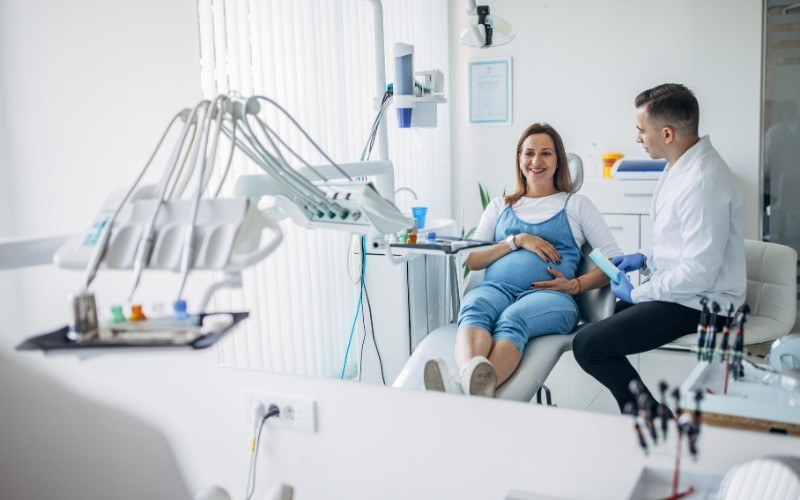
Pregnancy is a special time, and keeping stress low is important for your baby’s health. Dental visits can sometimes be stressful, especially when getting veneers, which may take two or three appointments.
If you feel nervous sitting in the dentist’s chair or if lying back for a long time is uncomfortable, it might be best to wait until after your baby is born before getting veneers. Multiple visits can be hard to manage when you’re already dealing with pregnancy changes.
The best step is to talk with your dentist. They can check your teeth, listen to your concerns, and help decide if veneers are right for you now or if it’s better to wait.
Caring for Your Veneers Safely During Pregnancy
Taking care of your teeth is important during pregnancy, especially if you have veneers. Good habits can keep your smile healthy and strong for both you and your baby.
Use a medium-hard toothbrush and toothpaste without harsh ingredients. This will clean your teeth well without damaging your veneers or gums. Mouthwash with xylitol is also a great choice—it helps stop bacteria, lowers the risk of cavities, fights fungi, and keeps your mouth’s balance just right.
And don’t forget to floss every day! Cleaning between your teeth removes plaque and helps prevent gum problems, which are common during pregnancy. These simple steps can make a big difference in keeping your veneers and natural teeth healthy while you’re expecting.
Before and After: Transformative Results with Avangart Clinic
We carry out all our dental treatments with care and strive to give your smile an elegant appearance.