All-on-4 vs. All-on-6 vs. All-on-8: A Clinical Guide to Full-Arch Dental Implants

Dr. Emrah YEŞİLYURT
Dr. Emrah Yeşilyurt is the Founder of Avangart Clinic. He combines advanced dental expertise with a genuine commitment to helping patients feel comfortable and informed about their oral health journey.
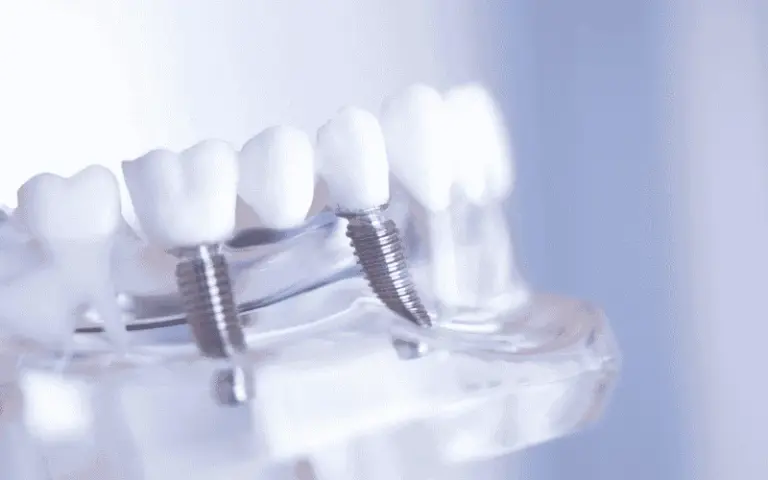
Choosing four, six, or eight implants is not like upgrading to a better package. The right number depends on your 3D CBCT scan, how much bone is available, the shape of your jaw, your occlusal load (the pressure created when you bite), and whether you bite or grind with a lot of force.
A full-arch restoration must spread biting pressure safely through the implants and the surrounding bone. Before recommending a fixed implant-supported prosthesis, our clinicians assess the antero-posterior spread (the front-to-back positioning of the implants), likely cantilever length (how far the replacement teeth extend past the last supporting implant), maxillary bone density (the strength and thickness of the upper jaw bone), and the position of the sinuses or mandibular nerve (the main nerve in the lower jaw that must be avoided during implant placement).
Under the clinical guidance of Dr. Emrah Yeşilyurt, we treat implant count as part of our comprehensive full-mouth rehabilitation protocols. The budget enters the discussion after we establish which options can safely support your new teeth.
All-on-4 is already a well-established treatment rather than an experimental shortcut. A 10-year longitudinal study tracking 245 patients and 980 immediate-loading implants in the lower jaw reported a 94.8% implant survival rate and a 99.2% prosthesis survival rate over the follow-up period. These findings support the clinical credibility of modern implantology protocols and highlight why the survival of the implants and the bridge must be measured as two separate outcomes.
The Core Difference: It’s About Anatomy, Not Just Budget
The mandible (lower jaw) usually contains denser bone than the maxilla (upper jaw). The upper jaw often has softer bone, and the maxillary sinus (an air-filled space above the upper back teeth) can limit the space available for posterior implants (implants placed toward the back of the jaw).
This anatomical difference sometimes leads to a four-implant restoration in the lower jaw and six implants in the upper. However, a “4/6 approach” is not an automatic rule. Some upper jaws can support four implants predictably, while certain lower jaws require more support or additional treatment.
An American Dental Association (ADA) report illustrates how differently the jaws can behave. In a small study of ten patients with no natural teeth, two narrow-diameter implants supporting an overdenture had a three-year survival rate of 100% in the mandible (lower jaw) and 68% in the maxilla (upper jaw).
That study did not examine All-on-4 or All-on-6 fixed bridges, so its percentages cannot determine how many implants a full-arch patient needs. It does reinforce why upper- and lower-jaw treatment plans cannot be treated as interchangeable.
A CBCT scan allows us to examine:
- Available anterior bone (bone at the front of the jaw) and areas of bone resorption (bone shrinkage after tooth loss)
- Jaw width, height, and anatomical shape
- The maxillary sinus (the air-filled space above the upper back teeth) and inferior alveolar nerve (the main nerve running through the lower jaw)
- Potential implant positions and angulations (the angles at which implants may be placed)
- Whether bone grafting or a sinus lift may be necessary
International patients can receive a preliminary estimate from their panoramic X-ray, but the surgical plan is confirmed after in-person examination and volumetric imaging (3D imaging that shows bone depth and shape). At Avangart, treatment is carried out under strict international standards of surgical hygiene and material traceability, from implant placement to the final prosthesis.
All-on-4: The Gold Standard for Moderate Bone Loss
All-on-4 supports a complete fixed bridge with four implants. Two implants are generally placed vertically toward the front of the jaw, while the two posterior implants (implants placed toward the back of the jaw) may be tilted by approximately 30 to 45 degrees.
Tilting the posterior implants can anchor them in stronger bone at the front of the jaw, improve the front-to-back spread of support, and reduce how much of the bridge extends beyond the last implant. In suitable cases, it also avoids the sinus or nerve region and reduces the need for bone grafting.
This graft-less solution can be valuable for patients who have experienced moderate bone atrophy after years of missing teeth or denture use. Graft-free treatment is never guaranteed, because severe loss of anterior bone may still prevent safe conventional placement.
Immediate loading may allow us to place a fixed PMMA provisional bridge (a temporary acrylic bridge) on the same day as surgery or within 24 hours. This depends on whether the implants are stable enough at placement, whether biting forces can be controlled safely, the patient’s general health, and whether the temporary bridge can be securely and predictably supported through multi-unit abutments (connector pieces between the implants and the bridge).
The temporary teeth protect appearance and basic function while osseointegration takes place. Patients must follow a soft-food diet because “same-day teeth” do not mean the implants have already fused with the jaw.
When conventional implants cannot obtain adequate support, we may assess highly specialised alternatives such as zygomatic implants. This form of advanced anchorage for severe bone atrophy uses the cheekbone and is reserved for carefully selected cases.
All-on-6: Enhanced Stability and Clinical Redundancy
Patients researching all on 4 vs all on 6 dental implants often assume that six implants must provide a better result. Six can improve support, but only when the jaw has suitable bone at the additional placement sites.
All-on-6 usually spreads biting pressure across more implants. With less distance between each implant, pressure can be distributed more evenly through the bone and the bridge, which may improve stability, especially in wider jaws or in patients with a strong bite.
The two additional implants are often placed in straighter positions when the jaw allows. They are not always completely straight or always placed at the very back, because their final positions depend on the sinus area, the location of the nerve, the amount and distribution of available bone, and the design of the final bridge.
Six implants may be considered when a patient has:
- A wide or long dental arch
- Strong jaw muscles or high biting forces
- A history of bruxism
- Adequate bone at six useful implant sites
- A bridge design that works better with support spread across a wider area of the jaw
Clinical redundancy is another potential advantage. If one implant does not integrate, the remaining five may sometimes allow the bridge to be modified or supported while the failed site is treated.
This added flexibility does not guarantee that the original bridge can stay exactly as it is. Whether it can be kept, adjusted, or replaced depends on the position of the implants, the design of the bridge framework, how well healing has progressed, and how biting forces are shared across the restoration.
All-on-8: Maximum Support for Specific Anatomies
All-on-8 uses eight implants to support one full upper or lower arch of teeth. Because it requires enough natural bone in eight suitable positions, it is less common than four- or six-implant treatment.
Where bone is limited, placing eight implants may require grafting or maxillary sinus floor elevation (raising the sinus floor to create room for implants). If too many implants are placed too close together, cleaning around them can also become more difficult, so eight implants are not automatically the safest option.
One potential benefit is the option to support segmented bridges. For example, the restoration may be divided into three smaller sections instead of using one continuous bridge, provided the implant positions and prosthetic design permit it.
Segmentation can make future maintenance more localised. If one section chips or requires adjustment, the dentist may be able to remove that section without replacing the entire arch, although repair costs depend on the material and nature of the problem.
All-on-8 may be suitable for patients with a broad jaw, strong bone, high biting demands, or a treatment plan that involves a segmented bridge. Our fee schedule provides a clear breakdown of treatment costs, including the implants, abutments, temporary teeth, and final bridge material.
How to Compare Costs for Dental Tourism Patients
The cost for all-on-4 is usually lower because it involves fewer implants and may avoid grafting. However, the lowest initial quote is not always the lowest total out-of-pocket expense.
An accurate all-on-4 vs all-on-6 cost comparison should include everything required from diagnosis to the final bridge:
- CBCT imaging and digital planning
- Extractions and infection treatment
- Implant fixtures and multi-unit abutments
- Bone grafting or sinus lifts, when required
- PMMA provisional teeth
- The final zirconia or porcelain-fused-to-metal bridge
- Sedation, medication, and follow-up care
- Hotel accommodation and local transfers
- The number of journeys to Istanbul
Patients travelling from New York, London, or elsewhere in Europe often find that treatment in Istanbul costs less than local private care. Compare itemised treatment plans carefully, because one clinic may quote for the surgery alone, while another may include both the temporary and final teeth in the total price.
All-inclusive implant packages may combine clinical treatment with hotel accommodation and VIP transfers. Ask which implant brand, bridge material, scans, grafts, and follow-up services are included before comparing totals.
If All-on-6 or All-on-8 requires a sinus lift or extensive bone grafting, the overall treatment timeline can become longer. Some patients need time for the grafted area to heal before implants can be placed, followed by another healing period before the final teeth can be fitted.
Even without preparatory grafting, full-arch treatment commonly follows a two-stage protocol. The first trip covers surgery and temporary teeth; the second takes place after approximately three to six months of osseointegration (the process of the implant bonding with the jaw bone) for the final prosthesis (the finished bridge or replacement teeth). Our step-by-step clinical timeline explains this journey from initial scan to final restoration.
Why Your Consultation Dictates the Final Treatment Plan
A WhatsApp quote gives you a useful starting estimate, but it cannot confirm the implant count. A panoramic X-ray shows general bone levels, while a CBCT scan reveals three-dimensional bone volume and the relationship between proposed implant sites, sinuses, and nerves.
You can upload your local panoramic X-ray for a preliminary assessment by our medical team. We may also review photographs, your medical history, existing dental records, and information about grinding or previous implant treatment.
After you arrive in Istanbul, the clinical examination and 3D imaging allow us to complete the digital treatment plan. We assess your bite, select appropriate implant positions, and confirm whether immediate loading (placing temporary teeth soon after surgery) is safe.
Your final bridge may use monolithic zirconia, porcelain fused to metal, or another clinically appropriate material. We also document the implant system and connector components (the parts that join the bridge to the implants) so that you have clear records for future maintenance. Patients can review our global recognition and formal clinical memberships when evaluating our professional credentials and experience with international implant cases.
FAQs
Additional implants may sometimes be placed later if adequate bone and prosthetic space remain. However, the existing bridge may no longer fit once new implants are added, so the change may require bone grafting, new abutments, and a completely new bridge. It is better to plan the appropriate implant distribution before the first surgery.
The healing process itself is usually similar and often takes around three to six months while the implants bond with the bone. However, All-on-8 may cause more swelling in the early stage because more implants are placed, and any added procedures such as bone grafting or a sinus lift can make the overall treatment timeline longer.
All-on-6 or All-on-8 may offer better load distribution (more even spreading of bite pressure) when adequate bone is available, but implant count alone cannot protect the restoration (the bridge or replacement teeth) from bruxism (teeth grinding or clenching). Bite adjustment (fine-tuning how the teeth meet), bridge material, cantilever control (limiting unsupported extension beyond the last implant), and a protective nightguard (a guard worn at night to protect the teeth and implants) are also central to the treatment plan.
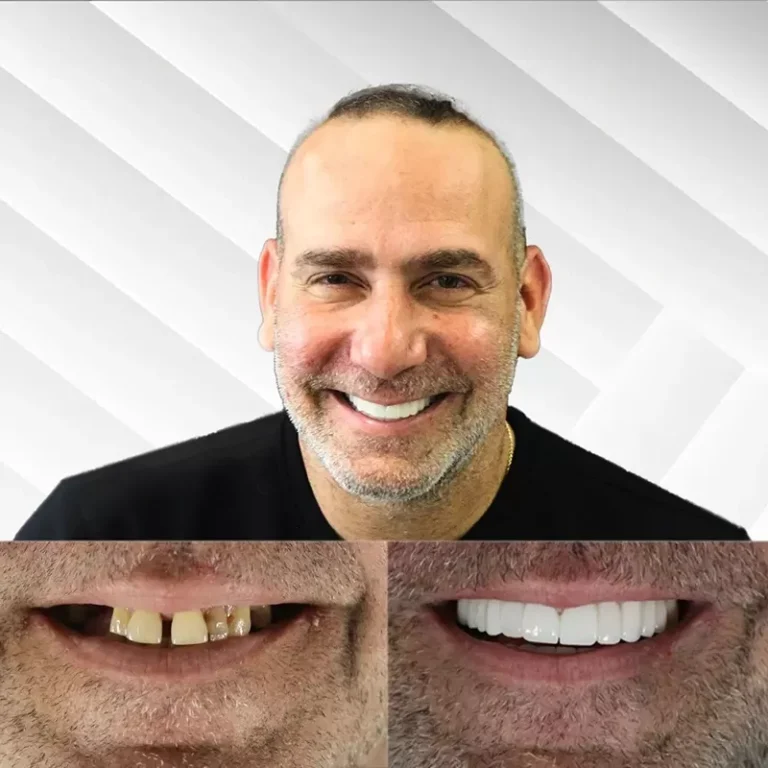
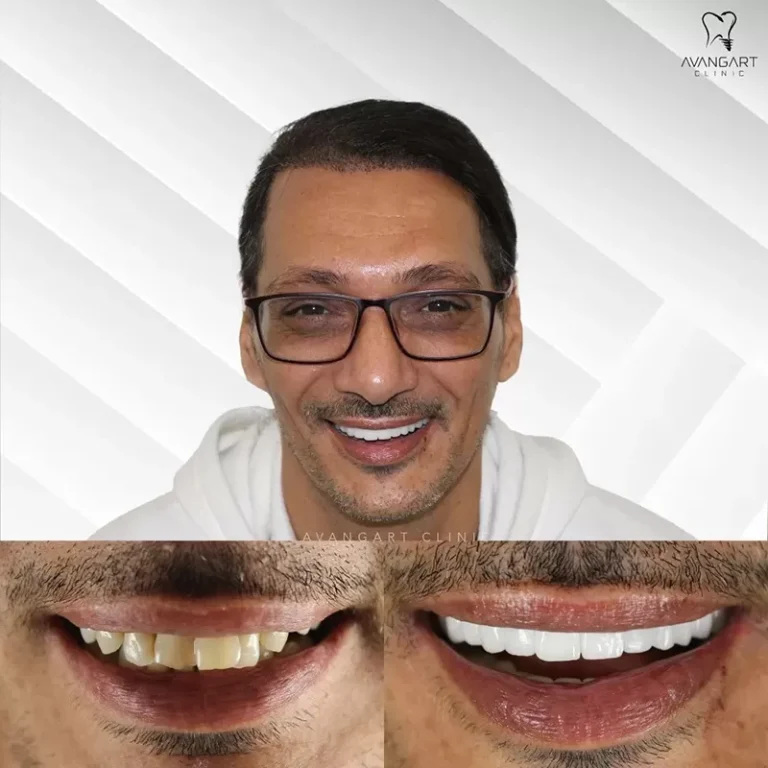
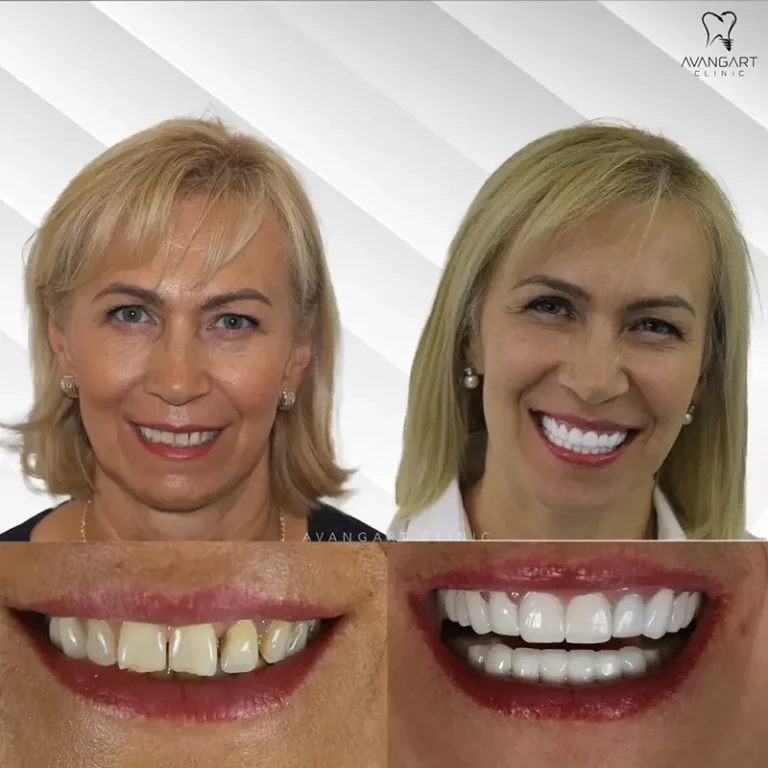
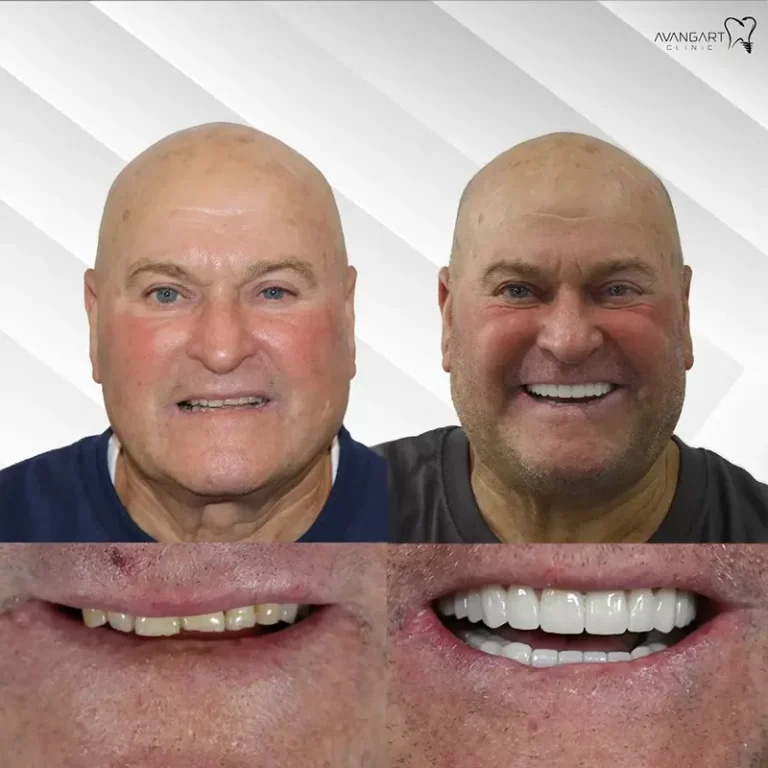
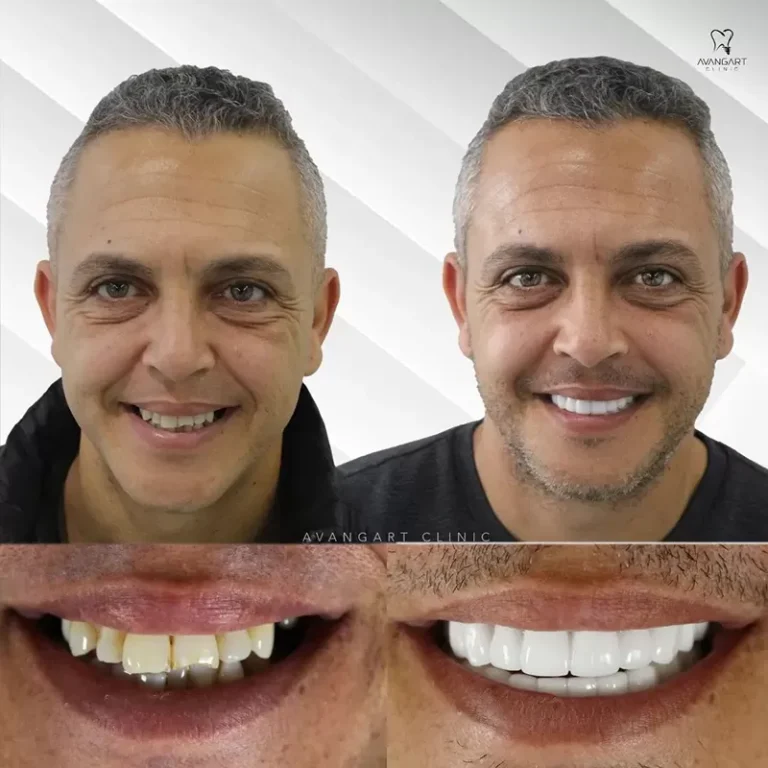
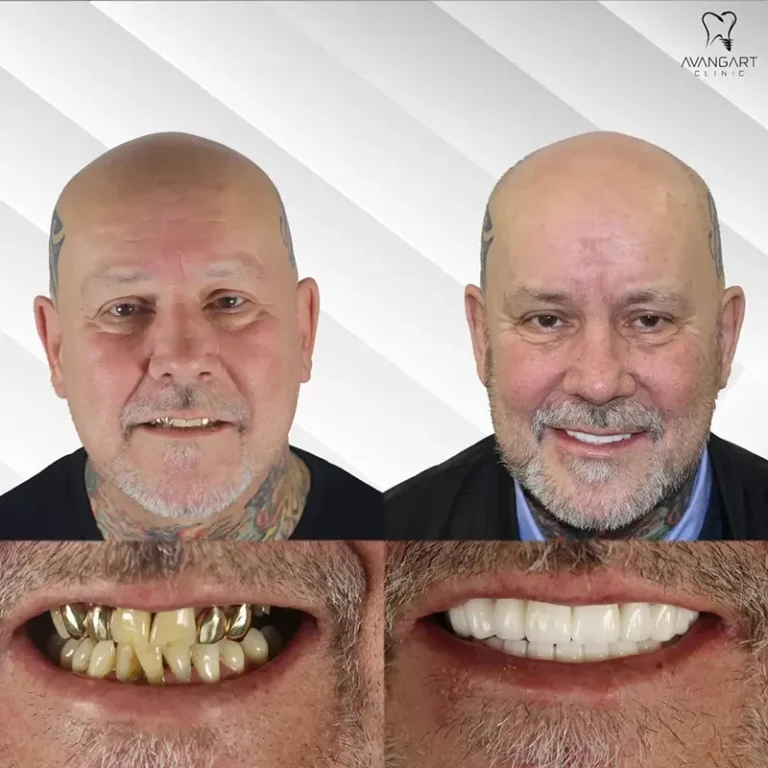
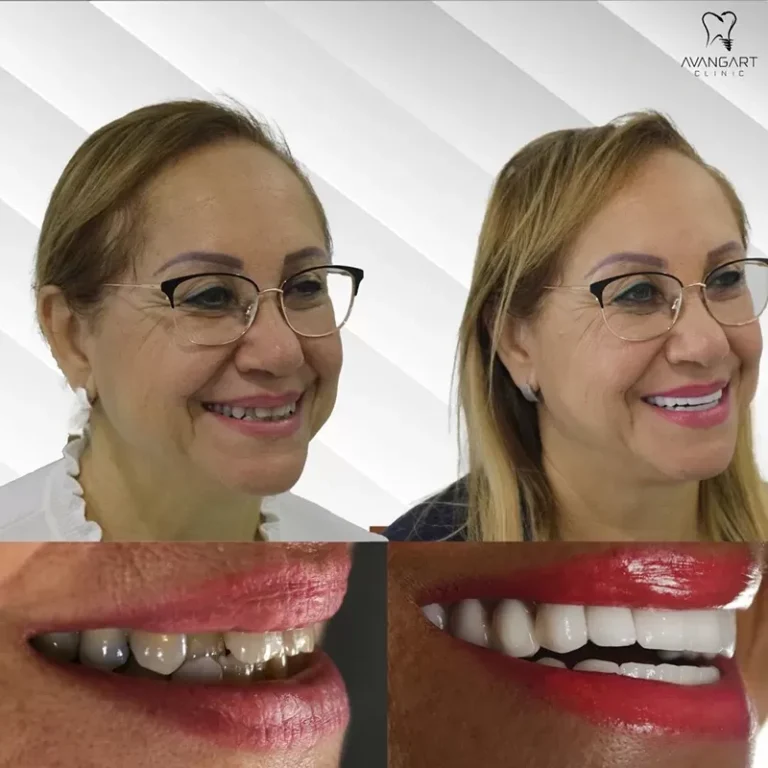
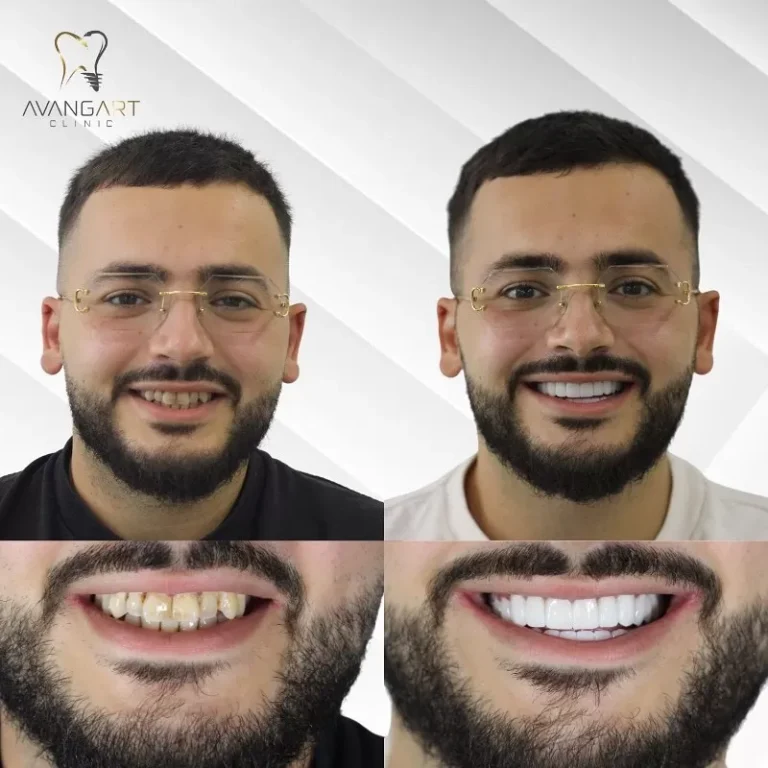
Before and After: Transformative Results with Avangart Clinic
We carry out all our dental treatments with care and strive to give your smile an elegant appearance.