
Tom Cruise Teeth: From ‘Middle Tooth’ to Perfect Smile
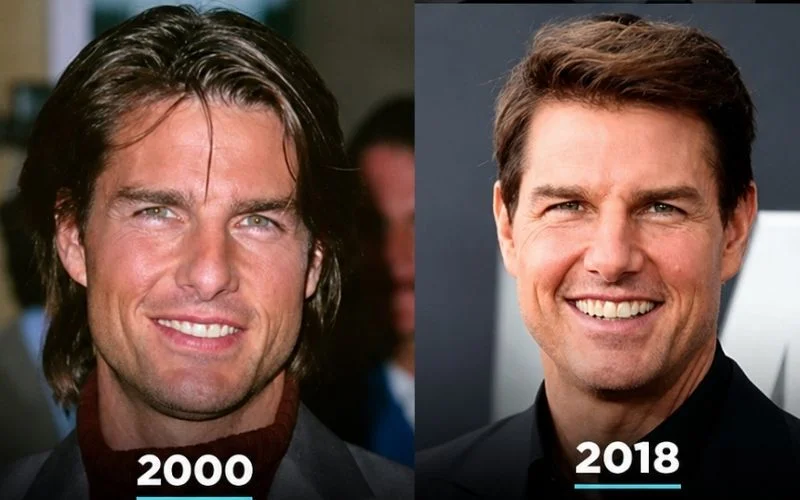
Understanding the Tom Cruise Teeth:
Tom Cruise’s teeth are almost as famous as his film career. His smile is bright, confident, and instantly recognisable, but what really catches people’s attention is its slight asymmetry. That small off-centre detail is one reason the Tom Cruise smile is so often discussed in cosmetic dentistry.
The Reality of the "Middle Tooth"
The well-known “Tom Cruise middle tooth” is not an extra tooth. It is the result of his dental midline not lining up perfectly with his facial midline, which makes one of the upper front teeth appear closer to the centre of his face. In simple terms, his teeth are slightly off centre, and that unique detail has become part of his signature smile.
Clinical Perspectives on Smile Design:
From a clinical perspective, the Tom Cruise midline shows how even a small difference in tooth position can change the balance of the whole face. The central incisors, gum line, tooth shade, and bite all play a role in how natural or “perfect” a smile appears. This is exactly why modern smile design is not just about making teeth whiter, but about creating harmony with the lips, nose, chin, and facial proportions.
Celebrity Transformations and Dental Impact:
- Comparing before and after images of Tom Cruise’s teeth highlights how changes in alignment, colour, shape, and symmetry can turn a natural smile into a polished one.
- While specific dental work has not been publicly confirmed, his smile serves as a clear example of how minor dental adjustments can create a major visual impact.

The 1980s: A Career Built on Character, Not Perfection
Early Career and Natural Charisma:
In the early 1980s, Tom Cruise did not need a perfect Hollywood smile to stand out. What made him memorable was his confidence, expression, and raw screen presence. His smile had natural imperfections, including uneven alignment and what appeared to be a previously treated front tooth, but none of that took away from his charisma.
The Outsiders and Authentic Character
- A key moment came in The Outsiders in 1983.
- It is widely reported that Cruise removed a cap or crown from a damaged front tooth to make his character, Steve Randle, look more authentic.
The Evolution by Top Gun
By the time audiences saw Tom Cruise’s teeth in Top Gun in 1986, his smile appeared cleaner and more refined than in his earliest roles. It still had natural character, but the overall look was brighter and better balanced for leading-man roles. This stage shows that smile changes often happen step by step, rather than through one dramatic treatment.
Balancing Perfection and Naturalism
Not every attractive smile starts with perfect symmetry or perfect tooth shape. In many cases, the best cosmetic result comes from understanding what should be improved and what should be preserved, so the final smile still feels natural.
Satisfied Patient Reviews
EXCELLENTTrustindex verifies that the original source of the review is Google. Service impeccable. Je suis venue pour des implants. La prise en charge a été rapide et la douleur pendant et après l’opération a été à peine ressentie. Clinique très professionnelle et chirurgien expert. Personnel très accueillant, en particulier la Directrice. Recommande à tous ceux qui sont à la recherche de professionnels pour régler des problèmes dentaires Suis venue finaliser la pose des implants et des couronnes. Résultat impécable!Posted on GoogleTrustindex verifies that the original source of the review is Google. I visited from England and had a positive experience. I went for a Hollywood Smile look and couldn’t be happier with them. The clinic was very aesthetic & clean, the staff were very attentive and supportive & I high recommend them.Posted on GoogleTrustindex verifies that the original source of the review is Google. İmplantlarımı ve zirkyonyumlarımı yaptırdım 2 sene önce iyiki yaptırmışım çok memnunum doktorum emrah hoca işinde çok iyi birisi tüm çalışanlara çok teşekkür ediyorum güler yüzlü anlayışları için gülşah hanıma ayriyetten teşekkür ederim 🌹Posted on GoogleTrustindex verifies that the original source of the review is Google. Çok güzel ve güveninirPosted on GoogleTrustindex verifies that the original source of the review is Google. Friendly and approachable staff, above all I haven’t experienced any pain what so ever, it does truly shows core professionalism. Coming from Wolverhampton, UK and made implant surgery with sinuslifting Gedi JafarPosted on GoogleTrustindex verifies that the original source of the review is Google. Ik Marco, hebt mijn gebit laten doen bij Avangart.. En ben door lieve mensen goed ontvangen en behandeld.. Kliniek zeer hygienisch en goede apparatuur.. Deze kliniek zo ik zeker aanraden om je laten behandelen..😁Posted on GoogleTrustindex verifies that the original source of the review is Google. I traveled from the U.S. and had Avantgart Clinic positively transform my smile in a manner that I wouldn’t have conceived as being possible. Dr. Egemen, a true master in his field, was patient, considerate, and communicative throughout the process and his assistant, Sevim, was a real joy to work with. Together, the two of them combined to make the overall experience much greater than I could have ever hoped for, and the end result is a smile that is on par with the most glamorous of Hollywood stars. I am extremely satisfied and would highly recommend Avangart Clinic to anyone looking to enhance their smile at a great price and of the highest quality.Posted on GoogleTrustindex verifies that the original source of the review is Google. Herkes mükemmel ıscılık mükemmel teşekkür edıyorumPosted on GoogleTrustindex verifies that the original source of the review is Google. Emrah bey‘in diş konusundaki tecrübesi, güler yüzü ve uzmanlığı nedeniyle diş tedavilerim için her seferinde Avusturya‘dan İstanbul’a gelmekteyim. Diş kliniği de son teknolojik donanıma sahip güven verici muayenehaneler içermekte.Posted on GoogleTrustindex verifies that the original source of the review is Google. Güler yüzlü ekip, temiz ve modern bir klinik. Tedavi sürecim baştan sona çok profesyoneldi. Gönül rahatlığıyla tavsiye ederim.Verified by TrustindexTrustindex verified badge is the Universal Symbol of Trust. Only the greatest companies can get the verified badge who has a review score above 4.5, based on customer reviews over the past 12 months. Read more

The Science of the "Middle Tooth": Why is Tom Cruise’s Smile Off-Center?
What people call the “middle tooth” is actually a dental midline shift, not an extra tooth. In dentistry, the dental midline is the line between the two upper central incisors, while the facial midline runs vertically through the centre of the face, usually from the nose towards the chin. When these two lines do not match, the front teeth can appear shifted, even if the teeth themselves are healthy.
In Tom Cruise’s case, the upper teeth appear to sit slightly away from the centre of the nose. This creates the impression that one front tooth is more central than expected. This can happen because of tooth rotation, crowding, losing a tooth at a young age, previous trauma, or teeth gradually shifting over time.
A simple diagram would show this clearly:
- One vertical line through the nose and chin for the facial midline
- One vertical line between the two upper central incisors for the dental midline
- A small gap between the two lines to show the midline shift
This kind of shift is not only an aesthetic issue. It can also relate to occlusion and bite alignment, which is why orthodontic treatment is sometimes recommended before cosmetic work. This is where his braces become relevant. Braces do more than straighten the visible front teeth; they help guide the teeth into a healthier position, reduce crowding, and improve the way the upper and lower teeth bite together.
Correcting a midline is not always as simple as “moving the front teeth to the centre”. The dentist must consider bone shape, gum balance, root position, bite forces, and the vertical dimension of the face. In some patients, a small residual offset may be safer and more natural-looking than forcing perfect symmetry.
2002: The Year of the "Adult Braces."
Ceramic Braces and Adult Orthodontics
In 2002, Tom Cruise drew attention for appearing at the Minority Report premiere wearing ceramic braces at around the age of 40. This was unusual for a Hollywood star at the time, but it also made an important point clear: orthodontic treatment is not only for teenagers.
Ceramic braces can help correct crowding, tooth rotation, and bite alignment while remaining more discreet than traditional metal brackets. For adults who feel they have “missed the right age” for braces, this is a useful reminder that teeth can still be moved safely with the right planning.
Adult treatment often requires more precision because bone remodelling is slower than it is in younger patients. That does not make treatment impossible, but it does mean the dentist or orthodontist must carefully assess the roots, gums, occlusion, and long-term stability before beginning.
Whitening and Smile Brightening
After the teeth are better aligned, the next focus is often colour. A straighter smile usually looks brighter because the teeth catch light more evenly. This is why whitening is often planned after orthodontic treatment, rather than before it.
Professional teeth whitening may involve in-clinic bleaching, laser-assisted whitening, or custom trays, depending on the patient’s enamel and sensitivity level. The goal is not simply to make the teeth as white as possible, but to choose a tooth shade that still suits the face, skin tone, and age of the patient.
Veneers and Crowns as the Finishing Stage
Once alignment and colour have improved, some patients may still want changes to tooth shape, size, or surface texture. This is often the stage where people start wondering whether Tom Cruise may have had veneers, although he has never publicly confirmed the exact treatment. Veneers can improve the visible front surface of the teeth, while crowns are usually chosen when a tooth also needs more coverage and strength.
The important point is that veneers and crowns should not be viewed as shortcuts for every case. In a well-planned smile makeover, they work best when the bite, gum health, and tooth positions are already stable. That is what gives the smile a polished look without making it seem artificial.

Modern Day: Did He Get Veneers or Zirconium Crowns?
Looking at Tom Cruise’s smile today, the biggest change is not just that his teeth look brighter. They also look more even in shape, smoother in texture, and more consistent in colour. This is the typical finish people associate with a Hollywood Smile: clean tooth shade, balanced proportions, and a smile that photographs well from every angle.
Has he had veneers or zirconium crowns? Tom Cruise has not publicly confirmed the exact details, so no one can say with certainty from photos alone. However, his current smile does have the kind of uniform shape and polished surface often created with porcelain veneers, zirconium crowns, or a carefully planned combination of both.
Veneers are usually chosen when the natural teeth are healthy but need improvement in colour, shape, or minor unevenness.
Zirconium crowns are often used when a tooth needs more strength, coverage, or support, especially if it has been badly damaged before or already has an older restoration.
A natural-looking celebrity smile is rarely about making every tooth look identical. The best results come from matching the teeth to the face, lips, gum line, and bite. This is why modern smile design focuses on balance rather than simply choosing the whitest shade available.
For patients considering a similar result, the right option depends on the starting point:
- Dental Veneers may be suitable for improving tooth colour, shape, and small cosmetic flaws.
- Zirconium Crowns may be better when teeth need stronger coverage or a more complete restoration.
- A combined smile makeover may be recommended when some teeth need cosmetic refinement, and others need extra support.
What Tom Cruise’s smile shows is that a polished result should still feel personal. A well-designed smile can be bright and camera-ready without looking flat, bulky, or artificial.
Myths and Reality About Tom Cruise’s Teeth
Celebrity smiles often attract rumours, and Tom Cruise’s teeth are no exception. Some comments are based on real visual changes over time, while others are exaggerated or simply impossible to confirm without his dental records.
Myth: Tom Cruise always had “bad teeth”.
- Reality: His earlier smile had visible imperfections, but that doesn’t mean his teeth were “bad”. They had character, slight unevenness, and a more natural shade, which is very different from saying they were unhealthy or unattractive.
Myth: Veneers alone created his current smile.
- Reality: Veneers can improve colour, shape, and surface texture, but they do not properly correct bite issues or major tooth position problems. His public appearance with braces in 2002 suggests that alignment was an important part of the process before any cosmetic finishing work may have been considered.
Myth: His teeth should be perfectly centred now.
- Reality: Even today, Tom Cruise’s smile still appears slightly off-centre, and that is not necessarily a flaw. In cosmetic dentistry, a perfectly centred midline is not always the most natural or suitable result. In some cases, keeping a small offset can look more balanced and realistic than forcing exact symmetry.
Myth: Whitening alone gave him a Hollywood smile.
- Reality: Whitening can brighten the teeth, but it cannot change their size, shape, spacing, or position. A smile like that is more likely the result of several steps, including alignment, whitening, and possibly restorative or cosmetic treatment.
Myth: Every celebrity smile is fully artificial.
- Reality: The most successful smile makeovers are often the ones that keep some individuality. Tom Cruise’s smile is memorable because it looks polished, but not completely standardised. That is also the aim of good cosmetic dentistry: to improve the smile without removing the features that make it personal.

Why Are Veneers the Best Option?
Veneers are often one of the best options for patients who like the idea of a brighter, more even smile but do not need full orthodontic treatment or heavy dental reconstruction. They can improve the visible front surface of the teeth, helping with colour, shape, small gaps, worn edges, and mild unevenness.
The biggest benefit of veneers is that they can be planned in detail before the final smile is created. The dentist can adjust the colour, shape, length, and overall balance of the teeth so the result suits the patient’s face. This is why veneers work well for people who want a brighter, more polished smile, but still want it to look natural rather than bulky or overdone.
Veneers may be suitable if you want to improve:
- Discoloured teeth that do not respond well to whitening
- Small chips or worn tooth edges
- Uneven tooth shape or size
- Mild spacing between front teeth
- A smile that looks dull, narrow, or unbalanced
However, veneers are not the right answer for every case. If the teeth are very crowded, the bite is unstable, or there is active gum disease, those issues should be treated first. A smile makeover should be built on healthy teeth and gums, not used to cover existing problems.
This is why the consultation stage matters. Digital smile planning, shade selection, gum assessment, and bite analysis help decide whether veneers are enough or whether another treatment, such as crowns, whitening, or orthodontics, would give a better long-term result. Patients travelling internationally may also want to understand how HSA or FSA funds can be used for eligible dental treatment abroad, depending on their insurance plan.
The best veneer result is not the whitest or most dramatic one. It is the one that suits the patient’s face, feels comfortable in the mouth, and still looks natural when they speak, smile, and laugh.
Before and After: Transformative Results with Avangart Clinic
We carry out all our dental treatments with care and strive to give your smile an elegant appearance.


Risks and Considerations for Veneers and Zirconium Crowns
Veneers and zirconium crowns can make a smile look brighter and more balanced, but they should never be rushed. They stay with you for years, so your dentist needs to check the condition of your teeth, gums, and bite before anything is designed.
One of the main things to consider is how much of the natural tooth needs to be shaped. Veneers usually need only light preparation, because they cover the front surface of the tooth. Zirconium crowns cover the whole tooth, so they often need more shaping and are usually chosen when a tooth needs extra strength as well as a better appearance.
Some patients may feel mild sensitivity after treatment, especially during the first few days. This is usually temporary, but it matters if you already have sensitive teeth, gum recession, or older fillings. A careful consultation helps your dentist plan around these issues instead of discovering them too late.
The bite is another key factor. If veneers or crowns are placed without checking how the upper and lower teeth meet, the restorations may chip, loosen, or feel uncomfortable. Patients who grind their teeth at night may also need a protective night guard to help maintain the result.
Colour choice should also be handled with care. Very white teeth can look attractive in photos, but they may not suit every face. A good result should match the patient’s skin tone, lip shape, age, and overall facial balance, rather than simply copying a celebrity smile.
Before choosing veneers or zirconium crowns, patients should consider:
- Whether the teeth and gums are healthy enough for treatment
- How much natural tooth structure needs to be prepared
- Whether the bite is stable
- Whether they grind their teeth at night
- How natural or bright the final shade should be
- What level of maintenance will be needed over time
The safest approach is always a personalized treatment plan. When veneers or crowns are designed around the patient’s real dental condition, the result is more comfortable, more natural, and more likely to last.
- Disclaimer: This content is for educational purposes only and should not be used as a substitute for professional medical advice, diagnosis, or treatment from a qualified dental professional.
FAQs
Yes, Tom Cruise’s smile has clearly changed over the years, and the most confirmed part of that transformation is his orthodontic treatment. He was publicly seen wearing ceramic braces in 2002, which suggests he had treatment to improve tooth alignment and bite balance.
Other changes, such as a brighter tooth colour and more even tooth shape, may have involved cosmetic dentistry, but the exact treatments have not been publicly confirmed by Tom Cruise himself. From a dental point of view, his smile appears to be the result of several treatments carried out over time, rather than one single procedure.
It would be unfair to say Tom Cruise had “bad teeth”. His earlier smile had visible imperfections, including uneven alignment and signs of previous dental repair, but it still suited his face and did not stop him from becoming one of Hollywood’s most recognisable actors.
A better way to describe his early smile is natural and less refined. He appears to have improved certain details over time, including alignment, colour, and overall balance.
Tom Cruise has not publicly confirmed whether he has veneers. However, his current smile has the kind of smooth surface, even shape, and consistent colour that is often associated with porcelain veneers or similar cosmetic restorations.
Veneers are a popular way to improve tooth shade, shape, small chips, and minor unevenness. If a tooth has been damaged before or needs more strength, a crown may be more suitable, so it is not possible to identify the exact treatment from photos alone.
Tom Cruise’s teeth appear off-centre because the line between his two upper front teeth does not perfectly match the centre line of his face. This can be caused by natural tooth position, earlier dental trauma, crowding, or teeth gradually shifting over time.
This does not mean there is anything “wrong” with the smile. Many people have a small midline difference, and in some cases, it is barely noticeable until you compare the teeth with the nose, lips, and chin. With Tom Cruise, the offset became famous because his smile is photographed so often.
Tom Cruise does not actually have a middle tooth. The “middle tooth” look is an optical effect caused by one of his upper front teeth sitting closer to the centre of his face than expected.
In a perfectly centred smile, the space between the two front teeth lines up with the facial midline. In his case, that line appears slightly shifted, making one front tooth look more central. This is why people often describe it as a “middle tooth”, even though it is really a midline alignment issue rather than an extra tooth.