
What Is A Prosthetic Teeth? Types & How Is It Made?
How Prosthetic Teeth Work and What They Are Used For
Missing teeth can affect how you eat, speak, and smile, which can slowly wear down your confidence. Modern dental prosthesis options replace missing teeth with artificial ones that appear natural and feel stable, allowing you to resume your daily activities.
This guide will teach you how prosthetic teeth work, when they are recommended, and what benefits they can provide. We will also discuss turkey dental treatment for patients who want high-quality care at a reasonable price.
Satisfied Patient Reviews
EXCELLENTTrustindex verifies that the original source of the review is Google. Service impeccable. Je suis venue pour des implants. La prise en charge a été rapide et la douleur pendant et après l’opération a été à peine ressentie. Clinique très professionnelle et chirurgien expert. Personnel très accueillant, en particulier la Directrice. Recommande à tous ceux qui sont à la recherche de professionnels pour régler des problèmes dentaires Suis venue finaliser la pose des implants et des couronnes. Résultat impécable!Posted on GoogleTrustindex verifies that the original source of the review is Google. I visited from England and had a positive experience. I went for a Hollywood Smile look and couldn’t be happier with them. The clinic was very aesthetic & clean, the staff were very attentive and supportive & I high recommend them.Posted on GoogleTrustindex verifies that the original source of the review is Google. İmplantlarımı ve zirkyonyumlarımı yaptırdım 2 sene önce iyiki yaptırmışım çok memnunum doktorum emrah hoca işinde çok iyi birisi tüm çalışanlara çok teşekkür ediyorum güler yüzlü anlayışları için gülşah hanıma ayriyetten teşekkür ederim 🌹Posted on GoogleTrustindex verifies that the original source of the review is Google. Çok güzel ve güveninirPosted on GoogleTrustindex verifies that the original source of the review is Google. Friendly and approachable staff, above all I haven’t experienced any pain what so ever, it does truly shows core professionalism. Coming from Wolverhampton, UK and made implant surgery with sinuslifting Gedi JafarPosted on GoogleTrustindex verifies that the original source of the review is Google. Ik Marco, hebt mijn gebit laten doen bij Avangart.. En ben door lieve mensen goed ontvangen en behandeld.. Kliniek zeer hygienisch en goede apparatuur.. Deze kliniek zo ik zeker aanraden om je laten behandelen..😁Posted on GoogleTrustindex verifies that the original source of the review is Google. I traveled from the U.S. and had Avantgart Clinic positively transform my smile in a manner that I wouldn’t have conceived as being possible. Dr. Egemen, a true master in his field, was patient, considerate, and communicative throughout the process and his assistant, Sevim, was a real joy to work with. Together, the two of them combined to make the overall experience much greater than I could have ever hoped for, and the end result is a smile that is on par with the most glamorous of Hollywood stars. I am extremely satisfied and would highly recommend Avangart Clinic to anyone looking to enhance their smile at a great price and of the highest quality.Posted on GoogleTrustindex verifies that the original source of the review is Google. Herkes mükemmel ıscılık mükemmel teşekkür edıyorumPosted on GoogleTrustindex verifies that the original source of the review is Google. Emrah bey‘in diş konusundaki tecrübesi, güler yüzü ve uzmanlığı nedeniyle diş tedavilerim için her seferinde Avusturya‘dan İstanbul’a gelmekteyim. Diş kliniği de son teknolojik donanıma sahip güven verici muayenehaneler içermekte.Posted on GoogleTrustindex verifies that the original source of the review is Google. Güler yüzlü ekip, temiz ve modern bir klinik. Tedavi sürecim baştan sona çok profesyoneldi. Gönül rahatlığıyla tavsiye ederim.Verified by TrustindexTrustindex verified badge is the Universal Symbol of Trust. Only the greatest companies can get the verified badge who has a review score above 4.5, based on customer reviews over the past 12 months. Read more
How Are Prosthetic Teeth Made?
What is a dental prosthesis? When you visit the dentist for prosthetic teeth, they first check your mouth. They examine your remaining teeth, gums, and jawbone, and may take X-rays to get a complete picture.
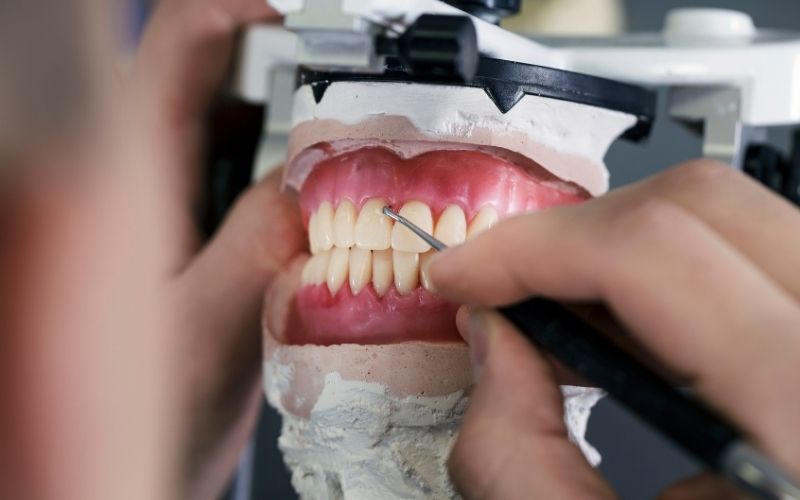
Next, the dentist takes impressions of your jaws to create a precise model of your bite. This model is used in the lab to shape your new acrylic or porcelain teeth to make sure they fit naturally.
1. Patient Assessment and Oral Evaluation
When you first visit the dentist, he or she will examine your mouth to determine what type of treatment you require. They look closely at your jaw joints, your bite, and the condition of your remaining teeth and gums, including any gaps that might need a front teeth prosthesis. If necessary, panoramic or 3D X-rays are used to better assess the health of your bone structure.
2. Taking Dental Impressions for Prosthetic Design
To plan your prosthetic teeth, the dentist first takes impressions of your upper and lower jaws, which capture the precise shape of your mouth. These impressions are made in one visit and used to create a model that helps the dentist study your bite, smile line, and tooth alignment. This precise measurement serves as the foundation for comfortable, natural-looking dentures in Turkey.
3. Designing the Prosthetic Structure
When your measurements are complete, the lab creates a detailed model of your teeth using either digital 3D tools or physical molds. On this model, the technician designs the shape, size, and arrangement of each tooth before selecting a shade that blends in with your natural smile so that the prosthesis does not stand out. A trial version is placed in your mouth so that your dentist can evaluate the bite, comfort, and appearance, and make any necessary adjustments.
4. Fabricating the Prosthetic Teeth
In this stage, your new teeth are built from strong but safe materials such as porcelain or acrylic. Fixed prosthetic teeth may also include a thin metal base to improve strength, while removable options are made from lighter materials that you can clean more easily at home. Each part is shaped and polished so it matches the design planned for your model.
Once the prosthesis is complete, your dentist will assess how it fits while you bite, chew, and speak. Any pressure points are adjusted, and the shape or height is changed slightly so that the result feels good and looks natural.
Who Is a Good Candidate for Prosthetic Teeth?
If you have lost one or more teeth and find it hard to chew, speak, or smile with confidence, you may be a good match for prosthetic teeth. People who feel that gaps in their smile affect their confidence or daily life often benefit from these treatments. Many patients first ask what is prosthetic teeth because they want a solution that looks natural and feels stable in daily life.
Dentures and other prosthetic options can help if tooth loss is due to decay, injury, gum disease, or failed fillings and root canal work. Dentures are also recommended for patients who have significant bite or jaw issues that can’t be corrected with fillings or other simpler treatments. Your dentist will assess your gums as well as the health of your bones and overall health to determine what type of prosthesis you need.
Different Types of Prosthetic Teeth Explained
1. Fixed Prosthetic Teeth
Fixed prosthetics are artificial teeth permanently attached to natural teeth or implants. They do not need to be removed at home. These are used to replace one or several missing teeth in a row. They are usually made from porcelain crowns or bridges. They remain in place and provide a strong chewing support. They can also resemble your natural teeth.
2. Removable Prosthetic Teeth
Removable prosthetic teeth are dentures that can be removed for cleaning and reinserted as needed. They are commonly used when there are several missing teeth and can be made as complete dentures that replace all teeth or partial dentures that fill only specific gaps. Many older adults prefer these options because they are more practical, simple to maintain, and can be adjusted or renewed over time.
3. Complete (Total) Prosthetics
Complete or total prosthetics are full dentures that replace all of the teeth in one jaw when there are no natural teeth left. They are made separately for the upper and lower jaws and rest on the existing bone and gum tissue, with a strong acrylic base and artificial teeth shaped to match your face. This option helps you chew again, supports your lips and cheeks, and can greatly improve your smile.
When you first wear complete dentures, they may feel large or strange, and your lips and cheeks may feel fuller than before. The lower denture usually moves more than the upper one, making it more difficult to control while speaking and eating. You may also notice more saliva production and minor changes in your speech. Reading out loud and repeating difficult words each day helps speed up this learning period, which for most people takes around four to six weeks.
4. Partial Dentures for Missing Teeth
Partial dentures are used when you still have some natural teeth, but there are empty spaces in your mouth. These removable dentures typically attach to your natural teeth with small metal clasps, allowing you to chew more effectively while also filling gaps in your smile. They are often made of a mix of acrylic and metal, which makes them strong but light enough to wear every day.
Many people like partial dentures because they are less invasive than fixed bridges or implants and can be modified or replaced if your mouth changes over time. For people who do not want to see the wires, special precision attachments can be made to make the support system less visible and the result look more natural.
5. Immediate Dentures After Tooth Extraction
Immediate dentures are a short-term solution that you receive straight after your teeth are removed, so you do not have to walk around with visible gaps in your smile. They help you keep a normal smile and basic chewing function while your gums and bone are healing in the first weeks. Your dentist designs them in advance, using impressions taken before the extractions.
After the extractions, your mouth changes shape as swelling goes down and tissues shrink. This makes the first denture looser or less accurate over time. When healing is mostly complete, a new permanent denture is made that fits the updated shape of your gums much more closely.
6. Overdentures for Improved Retention
Instead of sitting on the gums, overdentures rest on strong natural roots or a few remaining teeth. These roots give extra support and help the denture stay in place more firmly during eating and speaking. Dentists suggest this option when the roots are healthy enough to carry some of the load.
7. Implant-Supported Prosthetic Teeth
Implant-supported prosthetic teeth use small titanium posts embedded in the jawbone to function as artificial roots. After the implants have healed and bonded with the bone, special connectors are added to allow crowns, bridges, or dentures to lock firmly onto them and remain stable during daily use.
Implants can be used to stabilize removable dentures for people who have lost all or most of their teeth. This extra support helps you chew more easily and speak more clearly because the teeth feel more secure and move less in your mouth.
Benefits of Choosing Prosthetic Teeth
By choosing prosthetic teeth, you can restore the natural shape of a smile and support your cheeks and lips so that your face appears more balanced. By replacing gaps, dentures help you chew a wider range of foods again, which helps you get better nutrition and eat more enjoyable meals, and they also make it easier to pronounce words clearly. When they are made from strong modern materials and cared for properly, prosthetic teeth can serve you for many years, which makes them a cost-effective solution in the long term.
Before and After: Transformative Results with Avangart Clinic
We carry out all our dental treatments with care and strive to give your smile an elegant appearance.


What Is Denture Adhesive and When Do You Need It?
Denture adhesive is a water-soluble, safe product that you apply between your denture and gums to improve grip. It usually comes as a cream, powder, or gel that forms a thin, protective layer to keep your denture in place while you are eating, talking, laughing, and coughing. Many people feel more secure and relaxed in social situations when they use a small, correct amount of dental adhesive.
Normally, dentures hold to the tissues with a natural film of saliva, but this bond may be weak if you have dry mouth or less bone support. Adhesive strengthens this contact and reduces small movements that can cause rubbing or sore spots. It helps a lot in the first few months with new dentures or if your current denture is a little loose, but you should still see your dentist to make sure it fits.
How to Clean and Maintain Prosthetic Teeth Properly
Keeping prosthetic teeth clean every day helps them last longer and keeps your mouth healthier. After meals, take them out and rinse them under lukewarm water to clear away food pieces and clear plaque without damaging the material.
Brush your dentures at least once a day with a soft brush and a non-abrasive cleaner or denture cleaning tablets, then rinse well with clean water so no product stays on the surface. At night, take them out and keep them in water or a proper soaking solution. This lets your gums rest and helps the denture keep its shape.
Prosthetic Teeth Costs in 2025: What Affects the Price?
How much does prosthetic teeth cost in 2025? There is no single fixed price, because your final bill depends on your mouth, your treatment plan, and the kind of smile you want to achieve.
To make it clearer, prices usually change with:
- The type of prosthesis,
- The materials used,
- The dentist’s experience,
- Any extra steps such as extractions or implants.
Fixed options like crowns and bridges are often near the top of the price range because they use strong, natural-looking materials and careful lab work. Removable dentures can be more affordable, while implant-supported ones tend to be the most expensive but offer the best comfort and stability.
Not Sure Which Prosthetic Option Fits You? Get an Expert Assessment
A professional checkup will help you decide which prosthetic tooth option is right for you. Custom-designed dentures can help ease your worries and restore your natural smile. They can also help you chew comfortably. To get a personal assessment, call +90 212 211 82 11 or email contact@avangartclinic.com and book your visit.
Frequently Asked Questions About Prosthetic Teeth
Artificial teeth replace natural teeth that are missing or severely damaged. They are made to fit your mouth perfectly so that you can speak, smile, and chew more comfortably.