Can You Have Dental Implants If You Have Active Gum Disease?

Dr. Emrah YEŞİLYURT
Dr. Emrah Yeşilyurt is the Founder of Avangart Clinic. He combines advanced dental expertise with a genuine commitment to helping patients feel comfortable and informed about their oral health journey.
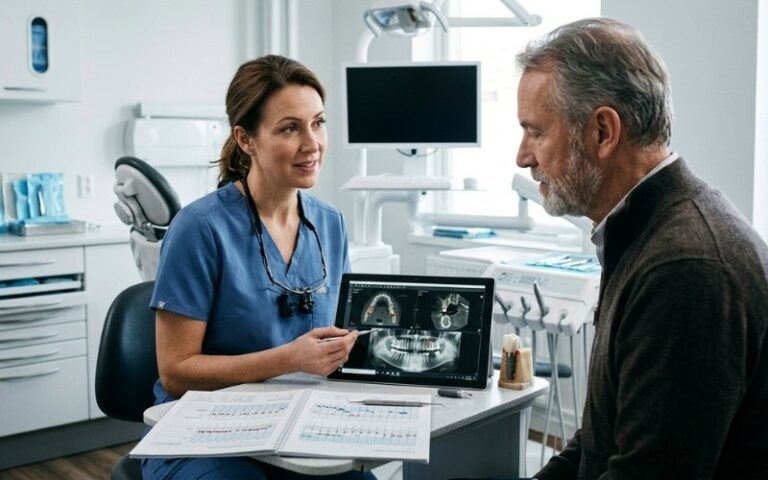
- You cannot have dental implants placed while you have active gum disease. Active periodontal infection damages the jawbone and can prevent a titanium implant from fusing with bone. However, once the disease is professionally treated and stabilized, you may become a candidate for dental implants.
Fortunately, active gum disease usually delays implant placement rather than preventing it entirely. Successful treatment relies on clearing the infection first and verifying you have adequate structural bone support.
We use clinical examination, periodontal measurements and imaging to assess who is a good candidate for dental implants. We also look at the bigger picture; your daily oral hygiene, smoking habits, and how well conditions like diabetes are managed will all help us determine the safest approach for your smile.
Satisfied Patient Reviews
EXCELLENTTrustindex verifies that the original source of the review is Google. Service impeccable. Je suis venue pour des implants. La prise en charge a été rapide et la douleur pendant et après l’opération a été à peine ressentie. Clinique très professionnelle et chirurgien expert. Personnel très accueillant, en particulier la Directrice. Recommande à tous ceux qui sont à la recherche de professionnels pour régler des problèmes dentaires Suis venue finaliser la pose des implants et des couronnes. Résultat impécable!Posted on GoogleTrustindex verifies that the original source of the review is Google. I visited from England and had a positive experience. I went for a Hollywood Smile look and couldn’t be happier with them. The clinic was very aesthetic & clean, the staff were very attentive and supportive & I high recommend them.Posted on GoogleTrustindex verifies that the original source of the review is Google. İmplantlarımı ve zirkyonyumlarımı yaptırdım 2 sene önce iyiki yaptırmışım çok memnunum doktorum emrah hoca işinde çok iyi birisi tüm çalışanlara çok teşekkür ediyorum güler yüzlü anlayışları için gülşah hanıma ayriyetten teşekkür ederim 🌹Posted on GoogleTrustindex verifies that the original source of the review is Google. Çok güzel ve güveninirPosted on GoogleTrustindex verifies that the original source of the review is Google. Friendly and approachable staff, above all I haven’t experienced any pain what so ever, it does truly shows core professionalism. Coming from Wolverhampton, UK and made implant surgery with sinuslifting Gedi JafarPosted on GoogleTrustindex verifies that the original source of the review is Google. Ik Marco, hebt mijn gebit laten doen bij Avangart.. En ben door lieve mensen goed ontvangen en behandeld.. Kliniek zeer hygienisch en goede apparatuur.. Deze kliniek zo ik zeker aanraden om je laten behandelen..😁Posted on GoogleTrustindex verifies that the original source of the review is Google. I traveled from the U.S. and had Avantgart Clinic positively transform my smile in a manner that I wouldn’t have conceived as being possible. Dr. Egemen, a true master in his field, was patient, considerate, and communicative throughout the process and his assistant, Sevim, was a real joy to work with. Together, the two of them combined to make the overall experience much greater than I could have ever hoped for, and the end result is a smile that is on par with the most glamorous of Hollywood stars. I am extremely satisfied and would highly recommend Avangart Clinic to anyone looking to enhance their smile at a great price and of the highest quality.Posted on GoogleTrustindex verifies that the original source of the review is Google. Herkes mükemmel ıscılık mükemmel teşekkür edıyorumPosted on GoogleTrustindex verifies that the original source of the review is Google. Emrah bey‘in diş konusundaki tecrübesi, güler yüzü ve uzmanlığı nedeniyle diş tedavilerim için her seferinde Avusturya‘dan İstanbul’a gelmekteyim. Diş kliniği de son teknolojik donanıma sahip güven verici muayenehaneler içermekte.Posted on GoogleTrustindex verifies that the original source of the review is Google. Güler yüzlü ekip, temiz ve modern bir klinik. Tedavi sürecim baştan sona çok profesyoneldi. Gönül rahatlığıyla tavsiye ederim.Verified by TrustindexTrustindex verified badge is the Universal Symbol of Trust. Only the greatest companies can get the verified badge who has a review score above 4.5, based on customer reviews over the past 12 months. Read more
Understanding How Gum Disease Affects Dental Implants
Natural teeth and implants both depend on healthy gum tissue and alveolar bone. The alveolar bone is the part of the jaw that surrounds and supports the tooth roots. Periodontitis causes a bacterial infection below the gum line, where inflammation gradually damages this bone and the connective tissue around the teeth.
Gingivitis is the earliest stage of gum disease. It causes plaque accumulation, swelling, and bleeding, but the vital bone supporting your teeth remains intact. Conversely, periodontitis is an advanced infection that actively destroys this support, leading to deep gum pockets, receding gums, chronic bad breath, and eventually tooth mobility.
Once your periodontal treatment is complete, we use precise clinical measurements to verify that the infection is under control. Published clinical periodontal stability criteria define a stable environment as having gum pockets no deeper than 4 millimeters, with minimal to no bleeding during examination. Hitting these specific targets proves your gums are healing properly.
However, this clearance is just the first step. Before placing an implant, we must also confirm you have adequate bone volume, evaluate any underlying medical conditions, and ensure you can easily clean the surgical site.
A titanium implant needs stable bone around it. During osseointegration, living bone grows into close contact with the implant surface and holds it firmly enough to support a crown or bridge. Low jawbone density, reduced bone volume or continuing inflammation can interfere with this bone fusion and soft tissue healing.
Placing an implant while you still have active gum disease is like building a house on sinking sand. If your gums and jawbone are not fully healthy first, harmful bacteria will quickly attack the new implant; in fact, ongoing infection is one of the main reasons a dental implant might fall out.
Of course, the level of risk varies from person to person. However, a large 2026 study of over 3,500 implants found that patients who lost their teeth specifically due to gum disease were more than three times as likely to experience implant failure compared to people who lost teeth for other reasons. While this statistic highlights a broad trend rather than predicting your personal outcome, it proves exactly why treating the infection first is so crucial.
The Threat of Peri-Implantitis
Peri-implantitis is an inflammatory disease affecting the gum and supporting bone around an implant. It can begin with bleeding, swelling or deeper pockets, then progress to bone loss if it is not detected and treated.
Unlike a natural tooth, an implant does not have a protective ligament connecting it to your jaw. Instead, it relies on your gum tissue to create a tight, protective collar around the metal post. If harmful bacteria break through this delicate seal, the infection can quickly spread deep into your jawbone.
When you have untreated gum disease, the bacteria causing the infection constantly linger around your other teeth. If we place an implant into this unhealthy environment, those same bacteria will quickly coat the new implant while it is trying to heal. Over time, the infection will eat away at the supporting bone, causing the gum to pull back and leaving the implant loose or at risk of failing entirely.
Past periodontitis also raises the need for closer monitoring after surgery. Sometimes, an implant can fail early in the process before it has a chance to fully fuse with your bone.
In other cases, an implant might heal perfectly at first, only to develop a new gum infection months or years later. Fortunately, neither of these outcomes is inevitable. However, knowing your history allows us to put a strong, personalized prevention plan in place right from the start.
The Roadmap to Becoming an Implant Candidate
Treatment identifies which teeth can be saved, where infection remains and how much bone is available. The plan may include periodontal therapy, extraction and tissue reconstruction.
The choice of restoration also matters. A patient missing one tooth may be choosing between single implant and bridge to determine the most suitable option for their long-term oral health. Someone with several failing teeth may need a personalized dental implant treatment plan involving separate implants or a fixed full-arch bridge.
The good news is that with proper preparation, you can achieve excellent, long-lasting results. In fact, a major 2026 study reviewing over 3,500 cases found an incredibly high 98.8% survival rate over five years. While these numbers are incredibly encouraging, they only happen when patients and dentists work closely together to cure any active gum infection and carefully manage personal health risks before surgery.
However, there is a big difference in the dental world between a ‘surviving’ implant and a ‘successful’ one. Survival merely means the implant did not fall out or need to be removed. That same surviving implant could still be struggling with gum inflammation, minor bone loss, or a chipped crown.
Real clinical implant success is a much higher bar. It requires the implant to be rock-solid, fully functional, painless, and free of any infection. Because of this distinction, a 98.8% survival rate is fantastic, but it does not guarantee a completely complication-free process.
Phase 1: Eradicating the Infection
The first goal is to reduce the bacterial load and stop active tissue destruction. Scaling and root planing, often called deep cleaning, removes plaque and tartar from below the gum line and smooths contaminated root surfaces. A dental hygienist or periodontist may also provide oral hygiene instruction based on the areas you struggle to clean.
After your initial treatment, your gums will need a follow-up assessment. The clinician will check for bleeding, measure your gum pockets, look for inflammation, and see if any teeth feel loose.
In some cases, your dentist might recommend a minor surgical procedure or laser therapy to help clear out the stubborn bacteria. However, it is important to remember that these advanced tools are simply meant to assist the deep cleaning process, not replace the hard work of physically removing the plaque.
Teeth that are extremely loose or severely decayed may no longer be salvageable. While extracting them removes a major source of infection, pulling a tooth does not cure the gum disease around your remaining teeth. Your entire mouth needs to be healthy before we move forward.
The exact timing of your implant placement will depend on what we find during your exam. We can consider immediate placement (placing the implant on the same day as the extraction) only if:
- The surgical site can be cleaned completely.
- You have enough healthy bone remaining.
- The implant can be anchored securely in the jaw.
However, if your bone is badly damaged or the infection is extensive, the safest option is to allow your mouth to heal completely before moving forward with surgery.
Phase 2: Rebuilding the Foundation (Bone Grafting)
Advanced periodontal disease may cause jawbone deterioration long before the tooth is removed. Bone loss can continue after extraction, leaving a ridge that is too narrow or short for the intended implant position.
Bone grafting adds material to an area with inadequate volume and gives the body a framework for new bone formation. Ridge augmentation may rebuild the width of the jaw, while a sinus lift can create space for graft material beneath the sinus when the upper back jaw lacks sufficient height.
Not every patient with previous periodontitis needs a graft. During your consultation, we will use a 3D CBCT scan and a physical exam to look closely at where the new tooth will go.
This allows us to see exactly how much bone you have left and decide if it is strong enough to safely support an implant on its own. If you do end up needing a graft, please keep in mind that the new bone will require a few months to heal before it is strong enough to hold your implant.
If you are missing most or all of your teeth, your dentist might evaluate whether an All-on-6 implant system is right for you. However, placing six titanium posts still requires enough high-quality bone to anchor them securely. It is a common misconception that simply adding more implants can make up for an active gum infection or a weak jawbone.
In cases where a bone graft is not possible, not wanted, or simply unlikely to work, your dentist will walk you through the best alternatives to dental implants. Depending on your unique situation, a traditional bridge or a comfortable removable denture might actually be the safest and most reliable way to restore your smile.
How Gum Disease Affects Your Dental Tourism Timeline
International patients often ask whether periodontal care should begin at home. If you have bleeding gums, loose teeth, swelling or a recent diagnosis of periodontitis, arrange a local assessment before booking flights. Starting treatment early may reduce infection and reveal whether you need a longer phased treatment plan.
To get started, simply send our clinic a recent panoramic X-ray, a few clear photographs of your mouth, and a full medical history. Providing these details allows our team to give you a preliminary idea of how the treatment process in Turkey will work for your specific smile.
Please keep in mind that this initial review cannot finalize your surgical plan. Because a standard panoramic X-ray is only a flat, two-dimensional image, we must see you in person for a 3D scan to accurately measure the width of your jawbone.
The likely sequence depends on the severity of disease and whether grafting can be combined with implant placement:
| Clinical Situation | First Istanbul Visit | Healing at Home | Likely Return Plan |
|---|---|---|---|
| Mild or moderate disease | Examination, CBCT, deep cleaning and necessary extractions. Immediate placement may be considered only when the site can be cleaned thoroughly, and the new implant can be anchored securely in the jawbone. | Usually 3–6 months if implants or grafts are placed. | Final teeth are attached once the bone has fully healed. If your surgery was delayed (due to bone grafts), the implant will be placed during this visit instead. |
| Severe or aggressive disease | Infection control, removal of hopeless teeth and bone or soft-tissue grafting where required. | Commonly 3–6 months or longer, based on the graft and healing response. | Implant placement after reassessment, followed by another healing period before the final bridge. |
While a seven-day stay is usually enough time for your surgery and initial check-ups, nothing can speed up your body’s natural healing process. If your case is complex, you may need two or even three trips to Istanbul. Because of this, no clinic should ever guarantee an exact length of the visit before seeing your 3D scans and assessing your gum health.
A reputable clinic will never rush an implant procedure just to meet your flight schedule. As you research the safety of implant treatment in Turkey, you must look beyond the promised timeline. Before you book, ask the clinic what factors would cause them to delay surgery, how they will monitor your recovery back home, and how your plan might change after an in-person scan.
Diagnostic Steps Before Travelling to Turkey
Obtain a recent panoramic X-ray from your local dentist before requesting a remote implant assessment. If you have periodontal charting that records pocket depths and bleeding points, send that as well. It gives the overseas clinician more context than photographs alone.
Share your medicines, allergies, smoking or vaping, diabetes control and previous gum treatment. Do not stop prescribed medicine unless the prescribing clinician and dental surgeon provide clear instructions.
Useful questions to ask an international dental clinic before travelling include:
- Who will diagnose and treat the periodontal disease?
- Which clinician will perform the implant surgery?
- Is this initial price quote just an estimate that might change after my in-person exam?
- Will I receive a 3D CBCT scan before surgery?
- Could grafting change the number of visits or the total cost?
- Who should I contact if bleeding, swelling or pain develops after I return home?
- What records will I receive for my local dentist or hygienist?
Implant Treatment Passport Checklist
Before returning home, request a digital or printed treatment passport containing these four records:
- Diagnostic records: Panoramic and relevant periapical X-rays, CBCT files when available, and periodontal charting with probing depths and BOP scores.
- Implant identification: Manufacturer, implant system, site, diameter, length and lot or batch number for every fixture.
- Surgical record: Procedure dates, extractions, graft or membrane materials, sinus procedures, primary stability details and any complications.
- Restorative and follow-up record: Abutment and prosthesis details, medicines, cleaning instructions, review schedule and an emergency contact for the treating clinic.
Keep this passport with your local dental records. It gives a dentist or hygienist the precise information needed for maintenance, component replacement or urgent care after you return home.
Long-Term Maintenance: Protecting Your Implants for Life
Periodontal treatment does not remove your future susceptibility to inflammation. Harmful plaque can still easily build up right where your new crown or bridge meets the gumline. If you have a history of gum disease, committing to excellent daily oral hygiene is the only way to ensure your implants last.
Your oral hygiene routine should match the restoration. Brush twice daily with a soft brush and clean between implant-supported teeth every day. Depending on the shape of the bridge, your dental hygienist may recommend implant floss, correctly sized interdental brushes or a water flosser.
Professional maintenance goes far beyond simply scraping away plaque. At your routine check-ups, the dental team will compare your current gum health to past measurements, check for any bleeding, test how your teeth fit together when you bite, and take new X-rays if needed. Catching and treating minor inflammation early is incredibly simple compared to trying to fix the severe bone loss that can happen if the problem is ignored.
Evidence supports regular follow-up. A 2024 study of 501 implants in 185 patients found peri-implantitis in about 9% of implants without periodontal implant maintenance, compared with about 4% of implants that received maintenance.
For someone with a periodontal history, reviews every three to six months may be appropriate, but the interval should be personalized. Disease stability, cleaning ability, smoking, diabetes and previous complications all influence how often you need professional care.
Contact a dentist promptly if you notice:
- Bleeding or swelling around an implant
- Pus, a persistent bad taste or new bad breath
- Gum recession exposing part of the implant
- Pain when biting or a change in the fit of the bridge
- Movement of the crown, bridge or implant
A loose crown screw is different from an implant failing in the bone, yet both require an examination. Avoid testing movement repeatedly with your fingers because this can worsen irritation or damage components.
Why Expert Periodontal Care Matters for International Patients
Treating cases with bone loss and active infection requires seamless teamwork between the specialists treating your gums, performing your surgery, and designing your new teeth. An experienced dental team will carefully decide which natural teeth can be saved, whether bone grafting is truly necessary, and how your final bridge can safely support your bite.
Because this is complex surgical work, you should always verify that your clinician is fully qualified and registered before you travel. Do not be afraid to ask to speak with the treating dentist or surgeon directly. While a patient coordinator is incredibly helpful for organizing your travel logistics, they should never be the one making medical decisions for you.
At Avangart Oral and Dental Health Polyclinic, we are fully authorized by the Turkish Ministry of Health to care for international patients. Our in-house specialists rely on advanced panoramic imaging and 3D CBCT scans for comprehensive implant planning and diagnostics. However, we only make our final surgical decisions after examining your gums, bite, and bone in person.
These detailed scans also help us when comparing systems that use four, six, or eight implants to support a full arch of teeth. We choose the correct number of posts based on your available bone, the unique shape of your jaw, and how the new teeth will balance your chewing forces. Simply using more implants does not automatically guarantee a safer or better result.
If you are travelling from abroad, a responsible dental plan will clearly outline which steps are guaranteed and which ones might change after your in-person exam. Your treatment plan should also detail the exact implant brands being used, the type of grafting material, your temporary teeth, the expected healing timelines, and how you will be cared for once you return home.
FAQs
Possibly, but active infection must be treated before surgery. Your clinician must assess the remaining bone, remove teeth that cannot be saved and figure out if your jaw requires a bone graft first, or if you just need to let the extraction sites heal before we can permanently anchor a new set of teeth.
No. Gingivitis affects the gums and can usually be reversed with effective cleaning and professional care, while periodontitis damages the deeper supporting tissues and jawbone and requires ongoing management.
A previous history increases susceptibility, but infection is not inevitable. By making sure your gums are completely healthy before surgery, maintaining excellent brushing habits at home, and keeping up with your regular dental check-ups, you can drastically lower your risks and catch any minor inflammation before it becomes a problem.
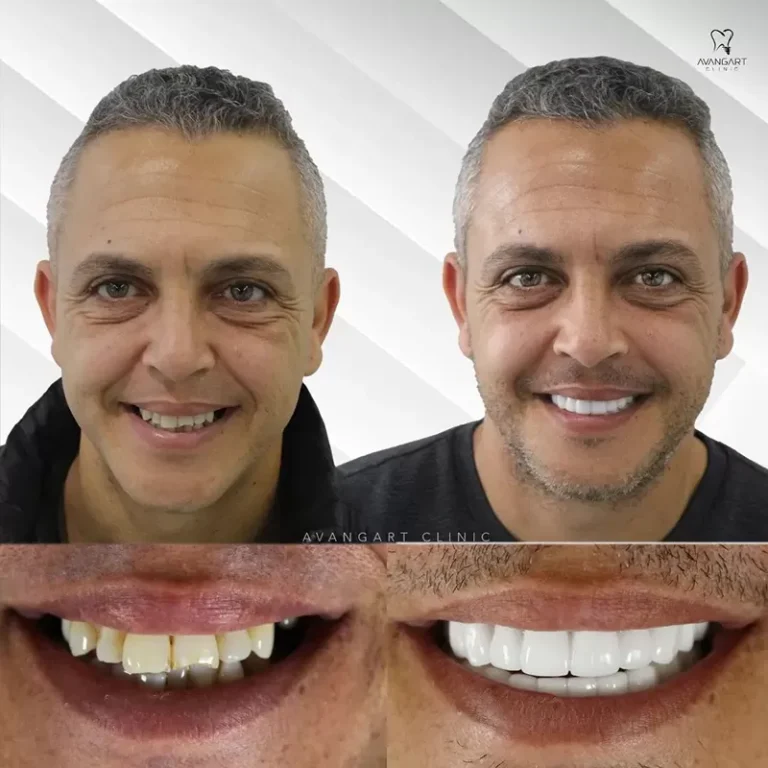
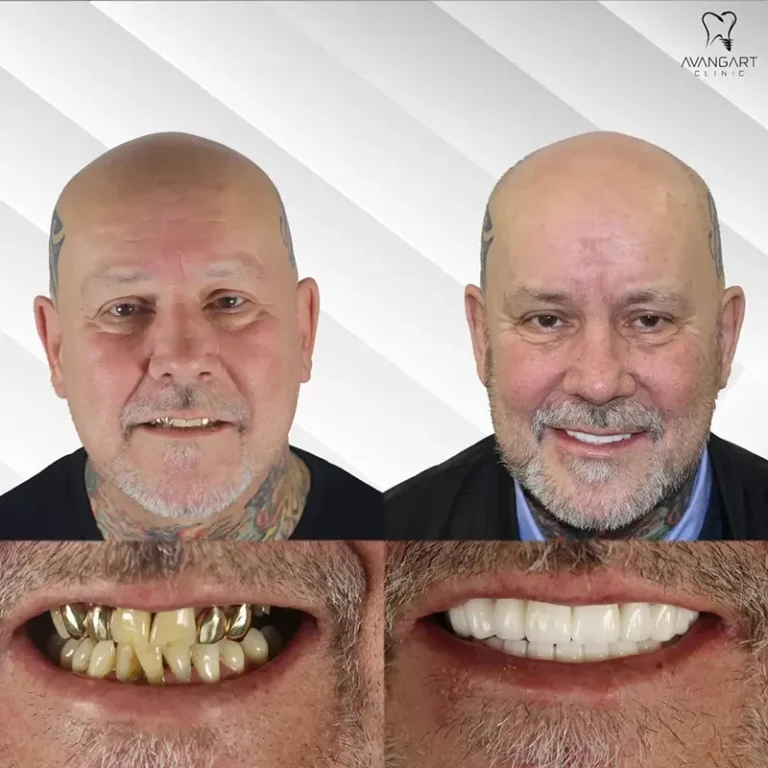
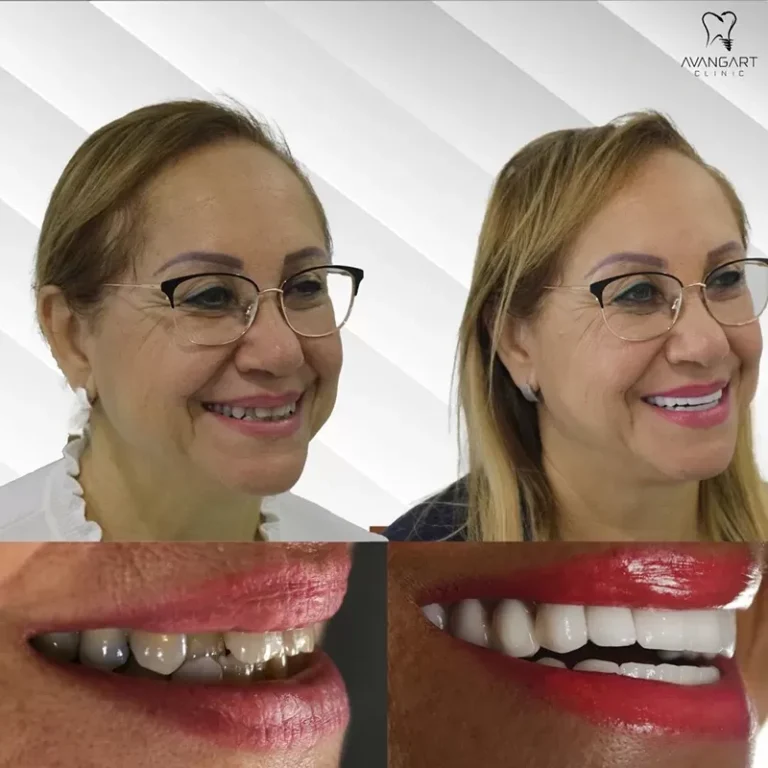
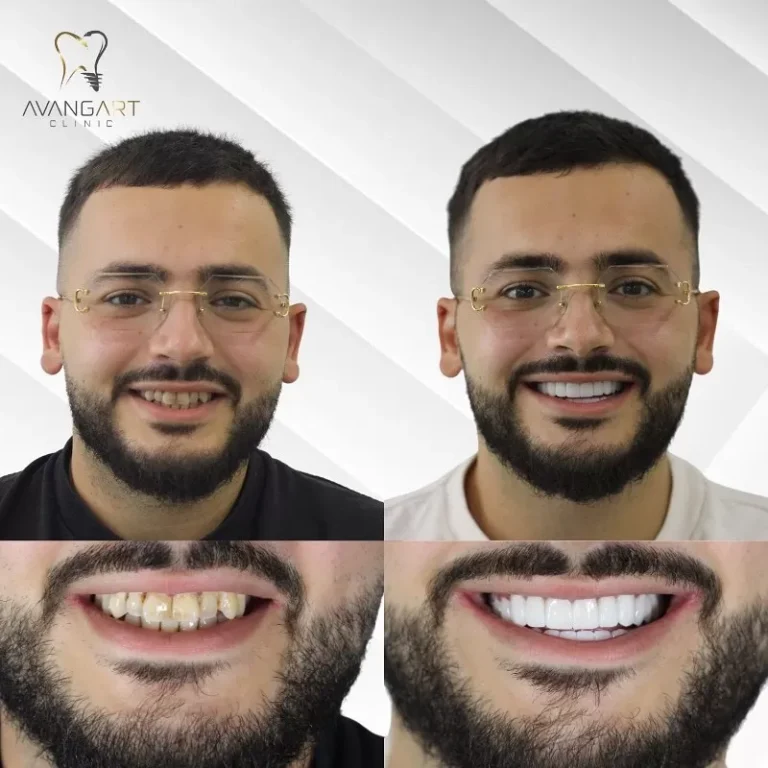
Before and After: Transformative Results with Avangart Clinic
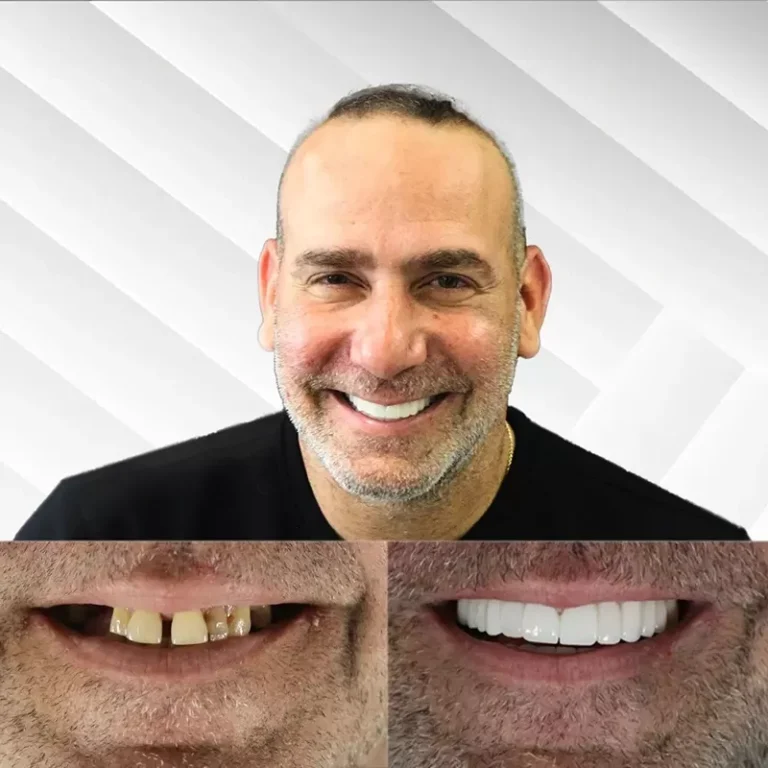
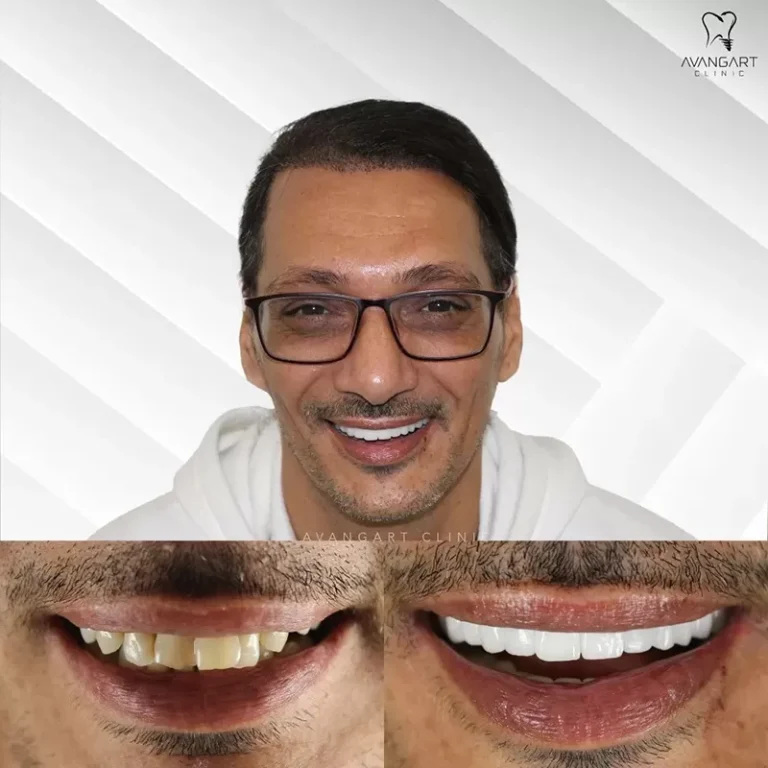
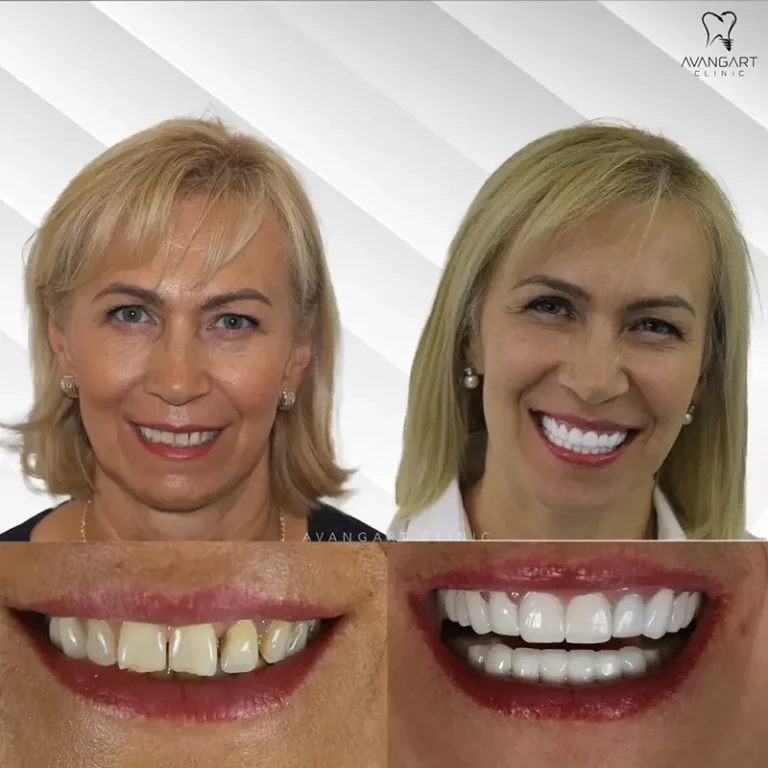
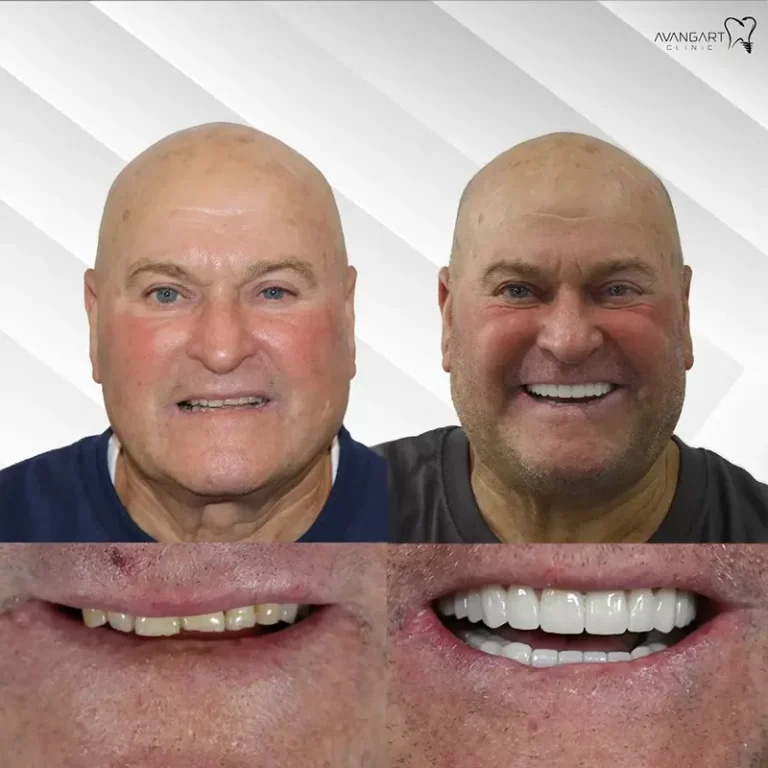
We carry out all our dental treatments with care and strive to give your smile an elegant appearance.